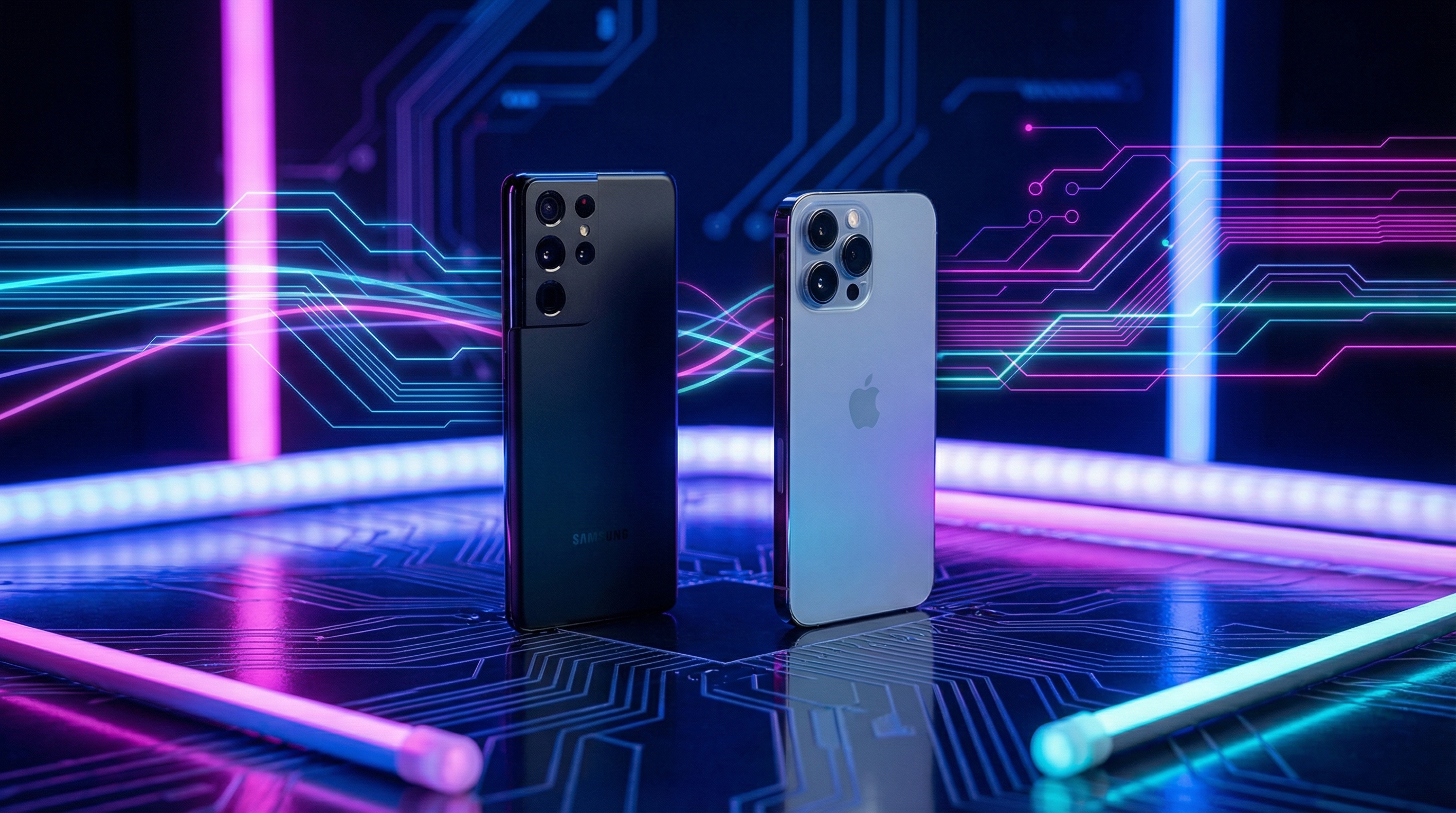
The smartphone landscape in 2025 has reached a fascinating inflection point. With AI integration becoming table stakes and hardware specifications pushing the boundaries of what pocketable devices can achieve, choosing your next flagship has never been more complex—or more exciting. Today, we’re diving deep into a three-way battle between the most compelling phones money can buy: Samsung’s Galaxy S25 Ultra, the OnePlus 15, and Apple’s iPhone 17 Pro Max.
Each of these devices represents the pinnacle of their respective ecosystems. Samsung continues to refine its Ultra formula with iterative improvements and aggressive AI integration. OnePlus throws down the gauntlet with a battery that seems to defy the laws of physics. And Apple? The Cupertino giant has delivered its most radical redesign in years while simultaneously creating the longest-lasting phone we’ve ever tested. So which one deserves your hard-earned cash? Let’s find out.
The Contenders: A Brief Overview
Samsung Galaxy S25 Ultra
Samsung’s flagship remains the benchmark against which all Android phones are measured. Priced at $1,299, the S25 Ultra arrives with subtle but meaningful refinements over its predecessor. The Snapdragon 8 Elite for Galaxy processor delivers blistering performance, while the 6.9-inch AMOLED display sets new standards for brightness and clarity. The camera system receives a notable upgrade in the ultrawide department, jumping from 12MP to 50MP. Perhaps most importantly, Samsung continues its industry-leading commitment to seven years of software updates, ensuring this phone stays relevant well into the next decade.
OnePlus 15
OnePlus has always marched to the beat of its own drum, and the OnePlus 15 represents the company’s most compelling value proposition yet. Starting at just $899, this phone packs the Snapdragon 8 Elite Gen 5 processor, a stunning 6.78-inch LTPO display with an unprecedented 165Hz gaming mode, and a camera system that finally competes with the big boys. But the real headline here is the battery—a staggering 7,300mAh cell that makes “battery anxiety” a phrase from a bygone era. With 80W wired and 50W wireless charging, this phone charges faster than most competitors too.
iPhone 17 Pro Max
Apple’s 2025 flagship is arguably its most ambitious phone in years. The $1,199 iPhone 17 Pro Max abandons the titanium-and-glass aesthetic of previous generations in favor of a bold aluminum unibody design that demands attention—especially in the eye-catching Cosmic Orange finish. But beneath the flashy exterior lies the real story: a battery life that outlasts every phone we’ve ever tested, combined with the new A19 Pro chip and a completely revamped camera system featuring three 48MP sensors. The new Center Stage front camera even lets you take landscape selfies while holding the phone vertically.
Design and Build Quality: Three Different Philosophies
Samsung Galaxy S25 Ultra: Refined but Familiar
Samsung’s design language for 2025 represents evolution rather than revolution. The S25 Ultra finally brings its aesthetics in line with the standard S25 and S25 Plus, abandoning the curved edges that previously distinguished the Ultra line. The result is a rectangular slab of aluminum and glass that feels premium but lacks personality. Measuring 162.8 x 77.6 x 8.2mm and weighing 218 grams, it’s substantial without being unwieldy.
The matte finish on the titanium frame looks sophisticated but creates a slipperiness problem—this phone practically demands a case. Samsung’s anti-reflective coating on the front glass remains best-in-class, dramatically reducing glare in bright sunlight. However, the decision to remove Bluetooth functionality from the S Pen continues to frustrate power users who relied on the stylus for remote camera control and presentations.
OnePlus 15: Modern and Distinctive
OnePlus has finally moved beyond its signature circular camera module, adopting a more contemporary squircle design that houses a vertically-oriented dual-lens pill and a separate third lens. The micro-arc oxidation process used on the metal frame creates a unique stone-like texture that feels both grippy and premium. Measuring 161.4 x 76.7 x 8.1mm and weighing just 211 grams, it’s surprisingly lightweight given the massive battery inside.
Where the OnePlus 15 truly distinguishes itself is durability. With IP66, IP68, IP69, and IP69K certifications, this phone can survive not just submersion in water but also high-pressure, high-temperature water jets. If you’re waterskiing or jet skiing, this is the phone you want in your pocket. The Sand Storm color variant even features a micro-arc oxidation frame treatment that adds extra durability.
iPhone 17 Pro Max: Bold and Polarizing
Apple’s design team clearly decided to shake things up this year, and the result is the most visually distinctive iPhone since the iPhone X. The aluminum unibody wraps around the entire device, creating a seamless feel that harkens back to the iPhone 6 era—but executed with far more sophistication. The “camera plateau” that spans the entire width of the phone’s back houses the new triple-camera system and gives the device an aggressive, almost industrial aesthetic.
At 163.4 x 78.0 x 8.75mm and 233 grams, the 17 Pro Max is the heaviest and thickest phone in this comparison. The Ceramic Shield cutout on the back—necessary for wireless charging—creates a two-tone effect that some find awkward. But the curved edges where the aluminum meets the front and back glass create a surprisingly comfortable in-hand feel, despite the phone’s considerable bulk.
Winner: This category comes down to personal preference. The OnePlus 15 offers the best durability and most unique texture, the iPhone delivers the most dramatic redesign, and Samsung provides the most polished refinement of a familiar formula. We’ll call it a three-way tie.
Display Technology: A Battle of Brightness
Samsung Galaxy S25 Ultra: The Outdoor King
Samsung continues to dominate the display conversation with its 6.9-inch Dynamic AMOLED 2X panel. The QHD+ resolution (3120 x 1440) delivers a pixel density of approximately 505 ppi, ensuring razor-sharp text and images. The 120Hz adaptive refresh rate smoothly transitions between 1Hz and 120Hz depending on content, conserving battery when you’re reading static text and delivering fluid animations when you’re gaming or scrolling.
The headline figure here is the 2,600-nit peak brightness—bright enough to remain perfectly readable even in direct sunlight. Samsung’s anti-reflective coating further enhances outdoor visibility, making this the best display for beach days and outdoor adventures. However, Samsung continues to ignore PWM (Pulse Width Modulation) sensitivity, which affects a small but significant portion of users who experience eye strain from Samsung’s dimming technique.
OnePlus 15: Gaming-Focused Innovation
The OnePlus 15 dials back the resolution slightly to 2,772 x 1,272 pixels across its 6.78-inch LTPO panel, resulting in 450 ppi. While technically less sharp than the Samsung, the difference is imperceptible in daily use. Where OnePlus pushes forward is refresh rate—the variable 1-120Hz panel can boost to 165Hz in gaming mode, delivering the smoothest mobile gaming experience available.
The 1,800-nit average brightness (with unspecified peak brightness) falls short of both competitors, though it’s more than adequate for most scenarios. The 20:9 aspect ratio feels modern and makes one-handed use more manageable than the slightly wider Samsung. OnePlus continues to ship with a pre-applied screen protector, though our testing suggests removing it for the best optical clarity.
iPhone 17 Pro Max: Brightest of Them All
Apple’s 6.9-inch Super Retina XDR OLED panel can hit a staggering 3,000 nits at peak brightness outdoors—the highest of any phone in this comparison. The 2,868 x 1,320 resolution delivers 460 ppi, slightly lower than Samsung but indistinguishable to the human eye. The 1-120Hz ProMotion adaptive refresh rate matches Samsung’s fluidity, and the new Ceramic Shield 2 front glass promises three times better scratch resistance than previous generations.
A new anti-reflective coating helps the display feel more immersive by cutting down on mirror-like reflections. The reduced reflectivity combined with that extreme peak brightness makes this the most legible phone display we’ve ever tested in direct sunlight.
Winner: iPhone 17 Pro Max edges ahead with its unmatched brightness and improved durability, though Samsung remains the choice for PWM-insensitive users who prioritize outdoor visibility. OnePlus takes third with its excellent gaming-focused refresh rate but lower overall brightness.
Performance and Gaming: The Power Paradox
Samsung Galaxy S25 Ultra: Custom Silicon Advantage
The Snapdragon 8 Elite for Galaxy isn’t just a rebadge—it’s a custom collaboration between Samsung and Qualcomm that delivers meaningful advantages. The chip features enhanced AI capabilities that enable more on-device processing, reducing reliance on cloud-based services and improving privacy. In Geekbench 6 testing, the S25 Ultra scores approximately 3,001 single-core and 9,381 multi-core—competitive but not class-leading.
Where Samsung’s optimization shines is sustained performance. The vapor chamber cooling system keeps the phone from throttling during extended gaming sessions, and One UI 7’s resource management ensures smooth multitasking even with dozens of apps open. The 12GB of RAM across all storage tiers is generous, though power users might wish for a 16GB option.
OnePlus 15: Raw Benchmark Dominance
With the Snapdragon 8 Elite Gen 5, the OnePlus 15 posts the highest benchmark scores in this comparison. Geekbench 6 results show approximately 3,669 single-core and 11,333 multi-core scores—significantly ahead of both competitors. The 360 Cryo-Velocity Cooling System with its 3D vapor chamber keeps temperatures in check during intensive workloads.
Gaming performance is exceptional, particularly with the Game Assistant software that optimizes performance on a per-game basis. The 165Hz display mode enables supported titles like Call of Duty Mobile to run at up to 165fps, delivering a competitive advantage in fast-paced multiplayer games. The bypass charging feature is particularly clever—powering the phone directly from the charger during gaming sessions preserves battery health.
iPhone 17 Pro Max: Efficiency Excellence
Apple’s A19 Pro chip continues the company’s tradition of delivering class-leading performance per watt. While benchmark comparisons between iOS and Android devices are inherently imperfect due to different operating system architectures, the A19 Pro’s efficiency is undeniable. After an hour of intensive gaming in Destiny: Rising, the 17 Pro Max remained barely warm to the touch—something neither Android competitor can match.
The custom vapor cooling chamber in the 17 Pro Max represents Apple’s first foray into active thermal management, and the results speak for themselves. The chip’s neural engine enables impressive on-device AI processing for photography and Apple Intelligence features without draining the battery.
Winner: OnePlus 15 takes the crown for raw performance and gaming features, but the iPhone 17 Pro Max’s efficiency and thermal management make it the better choice for users who prioritize sustained performance without heat buildup. Samsung sits comfortably in third with solid but unexceptional performance metrics.
Camera Systems: Versatility vs. Simplicity
Samsung Galaxy S25 Ultra: The Zoom Master
Samsung’s camera system remains the most versatile in the smartphone world. The 200MP main sensor captures stunning detail in good light, while pixel-binning to 12.5MP produces excellent low-light results. The real story, however, is the zoom flexibility. With a 3x telephoto for portraits and a 5x periscope for distance, the S25 Ultra covers every focal length from ultrawide to 100x Space Zoom.
The upgraded 50MP ultrawide sensor (up from 12MP) finally delivers quality that matches the main camera, making it viable for landscapes and architectural photography. Samsung has also reduced the infamous shutter lag that plagued previous generations, though occasional focusing issues persist in challenging lighting. Video capabilities include 8K recording and Expert RAW mode provides flexibility for post-processing enthusiasts.
OnePlus 15: The Underdog Surprise
OnePlus made the controversial decision to drop the Hasselblad partnership for the 15, instead developing its camera system independently. The result is a surprisingly capable triple 50MP setup that produces consistent, well-exposed images across all three lenses. The main Sony IMX906 sensor delivers sharp, accurate photos with improved dynamic range over the OnePlus 13.
The 3.5x periscope telephoto offers a unique middle ground between Samsung’s 3x and 5x options, and the 7x “optical quality” digital zoom produces usable results. However, night photography remains a weakness compared to Samsung and Apple, with more visible noise and less detail retention. The 4K120 Dolby Vision HDR video recording is impressive on paper but falls slightly short of the Galaxy’s implementation in practice.
iPhone 17 Pro Max: Computational Photography King
Apple’s complete camera overhaul for 2025 sees all three rear cameras upgraded to 48MP sensors. The main wide camera delivers the most consistent, true-to-life color reproduction in the industry. The new 4x telephoto—down from 5x on the 16 Pro Max—might seem like a downgrade, but the significantly larger sensor captures more light and produces sharper, brighter images at the expense of maximum zoom reach.
The Center Stage front camera is genuinely innovative. The 18MP square sensor allows you to hold the phone vertically and capture horizontal selfies—a feature content creators will love. Dual Capture mode records from front and rear cameras simultaneously, though the picture-in-picture implementation feels less polished than Samsung’s multi-camera video options.
Winner: Samsung Galaxy S25 Ultra retains the crown for versatility and zoom range, but the iPhone 17 Pro Max produces the most consistently excellent images with superior video quality. OnePlus earns an honorable mention for dramatic improvement but can’t quite match the established leaders.
Battery Life and Charging: The OnePlus Revolution
Samsung Galaxy S25 Ultra: Adequate but Aging
The 5,000mAh battery in the S25 Ultra is starting to feel dated in 2025. While Samsung’s efficiency improvements with the Snapdragon 8 Elite for Galaxy ensure the phone reliably lasts a full day—typically ending with 20-30% remaining after heavy use—it pales in comparison to the endurance champions in this comparison.
The bigger issue is charging speed. Samsung remains stuck at 45W wired and 15W wireless charging, speeds that felt fast in 2020 but are positively sluggish today. A full charge takes over an hour, and the lack of built-in Qi2 magnetic alignment means you’ll need a special case to use MagSafe-style accessories.
OnePlus 15: The Endurance Champion
This is where OnePlus absolutely demolishes the competition. The 7,300mAh Silicon NanoStack battery is nearly 50% larger than Samsung’s and delivers endurance that has to be experienced to be believed. In PCMag’s video streaming test with maximum brightness, the OnePlus 15 lasted an astonishing 26 hours and 11 minutes—double the Galaxy S25 Ultra’s 14 hours and 15 minutes.
Real-world usage is equally impressive. Even power users will struggle to drain this phone in a single day, and moderate users might genuinely forget where they left their charger. The 80W SuperVooc charging (with 100W support using an optional adapter) fills the massive battery from empty in just 31 minutes. The 50W AirVooc wireless charging is faster than Samsung’s wired charging. This is the phone for anyone who’s ever experienced battery anxiety.
iPhone 17 Pro Max: Efficiency Over Capacity
Apple has achieved something remarkable with the 17 Pro Max. Despite likely having a smaller battery than either competitor (Apple doesn’t disclose exact capacities), the phone delivers the best battery life CNET has ever tested. The combination of the efficient A19 Pro chip, optimized iOS 26, and what appears to be a significantly larger physical battery results in truly two-day endurance for moderate users.
In testing, the 17 Pro Max lost just 9% during a 3-hour video streaming test at maximum brightness—tied for the best score ever recorded. The 45-minute endurance test saw only a 1% drop, an almost unbelievable result. Charging remains a weakness, with 27W wired and 15W MagSafe wireless speeds that lag far behind OnePlus.
Winner: OnePlus 15 takes the crown for sheer battery capacity and charging speed, while the iPhone 17 Pro Max impresses with efficiency-driven endurance. Samsung lags significantly behind in both categories.
Software Experience: Ecosystems Matter
Samsung Galaxy S25 Ultra: Feature-Rich but Complex
One UI 7 represents Samsung’s most ambitious software release yet. The integration of Google Gemini alongside Samsung’s own Galaxy AI creates a powerful but sometimes overwhelming feature set. Now Brief attempts to surface relevant information throughout your day, though its utility depends heavily on your lifestyle and willingness to engage with AI features.
The seven-year software support commitment is industry-leading and provides genuine peace of mind. However, One UI’s complexity can be daunting for new users, and Samsung’s tendency to hide settings and change established behaviors between updates creates friction. The S Pen integration remains unmatched for note-taking and creative work, though the loss of Bluetooth functionality limits its utility as a remote control.
OnePlus 15: Clean but Compromised
OxygenOS 16 strikes a pleasant balance between feature-rich and bloat-free. The interface feels snappier than Samsung’s, and thoughtful additions like the OnePlus Shelf for widget organization and Car Sick mode for motion-sensitive passengers show genuine attention to user needs. The four-year OS update promise falls short of Samsung and Google’s seven-year commitments, though six years of security updates should satisfy most users.
The AI features—including AI Recorder, AI Portrait Glow, and Plus Mind screenshot management—are competent but clearly behind Samsung and Google in sophistication. The lack of carrier availability in the US (at launch) means you’ll need to buy unlocked and potentially deal with compatibility issues on certain networks.
iPhone 17 Pro Max: Polished but Restricted
iOS 26’s Liquid Glass design language brings a contemporary, cohesive aesthetic to the entire interface. Animations are buttery smooth, and the integration between hardware and software remains unmatched. Apple Intelligence features are gradually rolling out and promise meaningful utility rather than gimmicks, though the full feature set won’t be available at launch.
The walled garden remains both Apple’s greatest strength and weakness. The seamless ecosystem integration with Mac, iPad, and Apple Watch is genuinely compelling for existing Apple users. But the lack of customization options, sideloading restrictions (in most regions), and proprietary standards create friction for anyone who doesn’t live entirely within Apple’s ecosystem.
Winner: This category depends entirely on your existing digital life. iPhone users will find iOS 26 the most polished experience, Android enthusiasts will appreciate Samsung’s feature depth, and minimalists will gravitate toward OnePlus’s cleaner approach. Samsung wins for update longevity, Apple for polish, and OnePlus for speed.
Price and Value: Crunching the Numbers
Samsung Galaxy S25 Ultra: Premium Pricing
At $1,299 for the 256GB base model, the Galaxy S25 Ultra commands a premium that puts it within striking distance of the iPhone. The 512GB model jumps to $1,419, and the 1TB variant tops out at $1,659. Samsung’s trade-in deals and carrier promotions can significantly reduce these prices, but the MSRP is undeniably steep.
The value proposition hinges on how much you use the S Pen and Galaxy AI features. If you’re a power user who takes advantage of the stylus and Samsung’s ecosystem, the price is justified. For everyone else, the OnePlus 15 offers 90% of the experience for significantly less money.
OnePlus 15: The Value Champion
Starting at $899 for 12GB RAM and 256GB storage, the OnePlus 15 undercuts Samsung by $400 while delivering superior performance and battery life. The 16GB/512GB model at $999 still costs less than Samsung’s base model. This pricing strategy makes the OnePlus 15 the undeniable value leader in this comparison.
The trade-offs—less capable cameras, shorter software support, and limited carrier availability—are real but acceptable for the price savings. If you prioritize performance and battery life over camera versatility and ecosystem integration, this is the smartest money you can spend in 2025.
iPhone 17 Pro Max: Justifiable Premium
The $1,199 starting price positions the iPhone 17 Pro Max between its Android competitors. The 512GB model costs $1,399, the 1TB variant $1,599, and for the first time, a 2TB option is available at $1,799. Apple’s trade-in program and carrier deals can reduce these prices substantially, and the phone’s longevity helps justify the upfront cost.
For existing iPhone users, the upgrade from any model older than the iPhone 15 Pro is compelling. The redesigned hardware, exceptional battery life, and camera improvements create genuine value. For Android switchers, the ecosystem transition costs—both financial and learning curve—must be factored into the value equation.
Winner: OnePlus 15 wins decisively on pure value, offering flagship specs at a sub-flagship price. The iPhone 17 Pro Max justifies its premium through unmatched battery optimization and build quality, while Samsung’s pricing feels increasingly difficult to defend against such capable competition.
The Verdict: Which Phone Should You Buy?
Buy the Samsung Galaxy S25 Ultra if:
- You want the most versatile camera system with the best zoom capabilities
- The S Pen stylus is essential for your workflow
- You value Samsung’s industry-leading seven-year software support
- You’re already invested in the Galaxy ecosystem (Watch, Buds, Tablet)
- You prefer a familiar, refined design over bold experimentation
Buy the OnePlus 15 if:
- Battery anxiety is your primary concern
- You want the best performance-per-dollar ratio
- Gaming is a priority (165Hz display, bypass charging)
- You value durability and water resistance (IP69K certification)
- Fast charging is non-negotiable (80W wired, 50W wireless)
- You can live with slightly inferior cameras and shorter software support
Buy the iPhone 17 Pro Max if:
- You want the best battery life of any phone available
- You’re already invested in the Apple ecosystem
- Camera consistency and video quality are top priorities
- You appreciate bold, distinctive design
- Privacy and long-term software support matter to you
- The $1,199+ price point fits your budget
Final Thoughts
The 2025 flagship smartphone market has produced three exceptional devices that cater to distinctly different user profiles. Samsung’s Galaxy S25 Ultra remains the safe choice for Android enthusiasts who want every feature imaginable, even if few users will touch half of what the phone offers. OnePlus has created the enthusiast’s dream phone—a device that prioritizes the fundamentals (performance, battery, charging) while cutting costs on secondary features. And Apple has delivered its most compelling Pro Max in years, combining radical new design with the practical benefits of genuine all-day-plus battery life.
There’s no universal “best” phone here—only the best phone for you. The OnePlus 15’s value proposition is undeniable, making it our recommendation for most buyers. But if money is no object and you want the most polished experience possible, the iPhone 17 Pro Max justifies its premium. And for S Pen devotees and zoom photography enthusiasts, the Galaxy S25 Ultra remains the only game in town.
Whichever you choose, you’re getting one of the finest smartphones ever created. The gap between “good” and “great” has never been narrower, and that competition ultimately benefits all of us.
VSCompare is committed to providing thorough, unbiased reviews of the latest technology. Our comparisons are based on extensive hands-on testing, benchmark analysis, and real-world usage scenarios. Prices and availability are accurate as of publication date but subject to change.