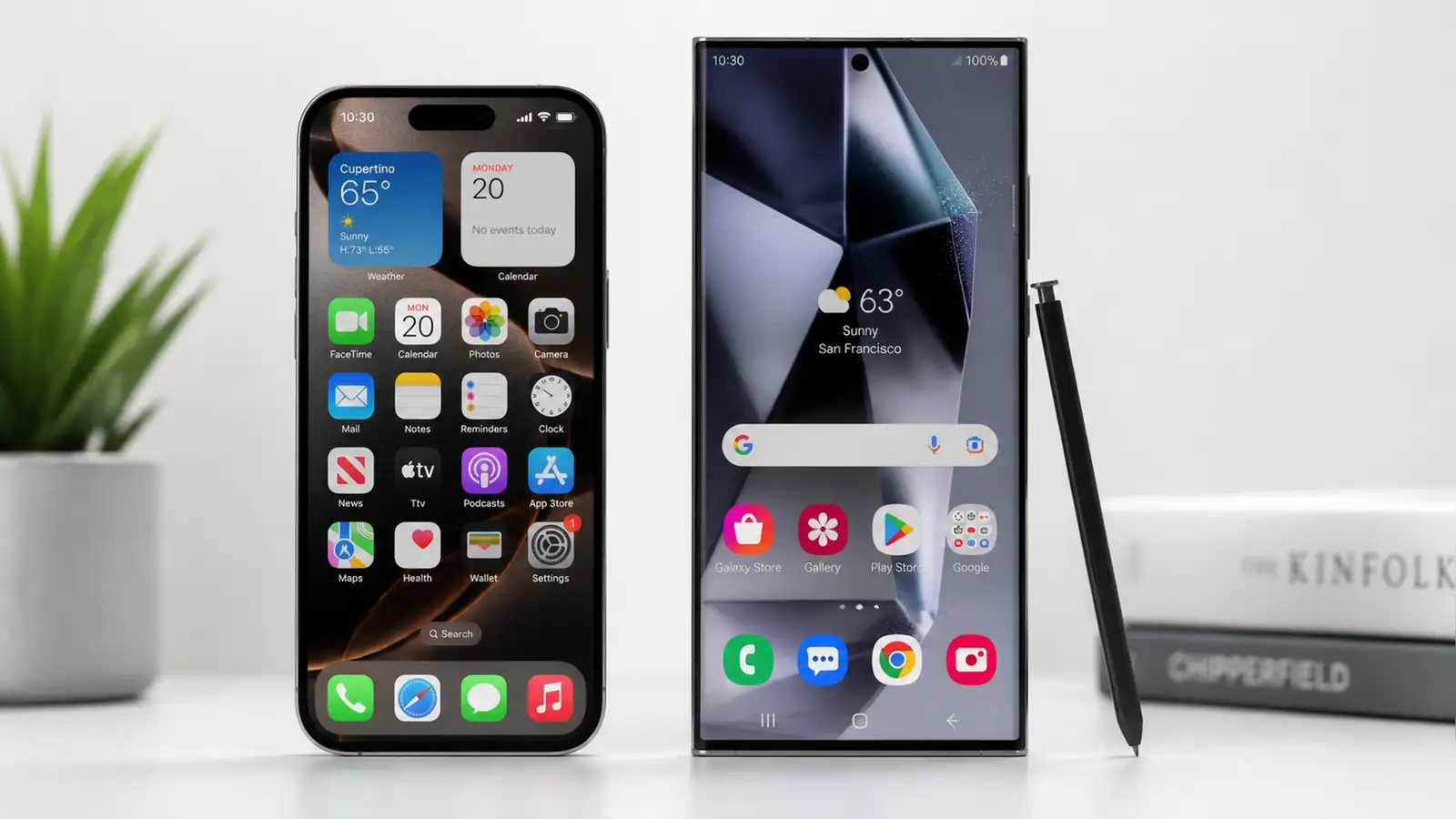
iPhone 17 Pro vs Galaxy S26 Ultra: The Flagship Battle of 2026
The iPhone 17 Pro and Samsung Galaxy S26 Ultra represent the pinnacle of smartphone technology in 2026. Both phones push the boundaries of what’s possible in a pocket-sized device, from advanced camera systems to powerful processors and stunning displays.
But they take different approaches. Apple focuses on refinement and ecosystem integration, while Samsung emphasizes raw specs and customization. The question is not which phone is objectively better, but which one better fits your needs and preferences.
After spending time with both devices, here is a detailed comparison across every category that matters.
Design and Build Quality
The iPhone 17 Pro continues Apple’s design language with a titanium frame and Ceramic Shield front. It feels dense and premium, with tight tolerances that make every button press and swipe feel deliberate. The flat edges are comfortable to grip, though some users still prefer the rounded design of older models.
The phone measures 147.5 x 71.5 x 8.3 mm and weighs 194 grams. It is slightly lighter than its predecessor, which makes a difference during extended use. The titanium frame is durable and resists fingerprints better than the stainless steel used in previous models.
The Galaxy S26 Ultra takes a different approach with its larger 6.9-inch display and more angular design. Samsung uses a titanium frame as well, but the phone feels slightly more substantial in hand. The S Pen silo is integrated into the frame, maintaining the clean lines that Galaxy Ultra phones are known for.
The S26 Ultra measures 162.3 x 77.3 x 8.6 mm and weighs 233 grams. It is noticeably larger and heavier than the iPhone, which can be a drawback for one-handed use but an advantage for media consumption and productivity.
Both phones are IP68 water and dust resistant, so you don’t need to worry about rain or accidental submersion. Build quality is excellent on both, though Apple’s fit and finish remains slightly more consistent across units.
Display Comparison
The iPhone 17 Pro features a 6.3-inch Super Retina XDR display with ProMotion technology. The 120Hz adaptive refresh rate makes scrolling smooth and responsive. Colors are accurate and vibrant, with excellent brightness for outdoor use. Apple’s True Tone technology adjusts the display based on ambient lighting, which some users love and others find distracting.
The display supports HDR content and delivers deep blacks thanks to OLED technology. Text is crisp and easy to read, even at small sizes. The always-on display shows time and notifications without waking the phone, which is a convenient feature for checking information at a glance.
The Galaxy S26 Ultra boasts a 6.9-inch Dynamic AMOLED 2X display with a 120Hz refresh rate. Samsung’s display is larger and brighter, with a peak brightness that exceeds 2,600 nits. This makes it easier to see in direct sunlight. The display also supports Vision Booster technology, which adjusts contrast based on ambient lighting.
Samsung’s display is slightly more vibrant than Apple’s, with punchier colors that some users prefer. The larger size makes it better for watching videos and playing games, though it can feel unwieldy for one-handed use.
For media consumption, the Galaxy S26 Ultra’s larger display gives it an edge. For one-handed use, the iPhone 17 Pro’s smaller size is more manageable. Both displays are excellent, so the choice comes down to size preference.
Camera System Comparison
Camera quality is often the deciding factor for flagship phone buyers, and both phones deliver excellent results with different strengths.
The iPhone 17 Pro features a triple-camera system with a 48MP main sensor, 12MP ultrawide, and 12MP telephoto with 5x optical zoom. Apple’s computational photography continues to impress, producing natural-looking photos with accurate colors and excellent dynamic range. The new Photonic Engine processes images faster, reducing shutter lag and improving low-light performance.
The main sensor captures detailed images with good color accuracy. The ultrawide lens maintains consistent color balance with the main camera, which is important for seamless switching between lenses. The telephoto lens provides clear results at 5x zoom, though digital zoom beyond that point degrades quality quickly.
The Galaxy S26 Ultra takes a more aggressive approach with a 200MP main sensor, 12MP ultrawide, and 50MP telephoto with 5x optical zoom. Samsung’s higher megapixel count allows for more detail in well-lit conditions, and the 100x Space Zoom feature can capture distant subjects that other phones cannot reach.
The 200MP sensor bins pixels down to 12.5MP for most shots, which improves low-light performance. When shooting at full resolution, the images contain extraordinary detail, though file sizes are significantly larger. The telephoto lens is particularly impressive, delivering clear results at 10x and even 30x zoom.
In practice, the iPhone 17 Pro produces more consistent results across different lighting conditions. The Galaxy S26 Ultra can capture more detail in bright light, but its processing sometimes looks over-sharpened. For video, both phones shoot 4K at 60fps with excellent stabilization, though the iPhone’s video quality is slightly more natural.
The choice depends on your photography style. If you prefer natural-looking photos with minimal editing, the iPhone 17 Pro is the better choice. If you want maximum detail and zoom capability, the Galaxy S26 Ultra delivers more raw capability.
Performance and Software
The iPhone 17 Pro runs Apple’s A19 Pro chip, which delivers excellent performance for both everyday tasks and demanding applications. The chip’s neural engine powers advanced AI features, including real-time photo processing and on-device machine learning. iOS 20 feels smooth and responsive, with tight integration across Apple’s ecosystem.
The A19 Pro handles gaming with ease, maintaining high frame rates in demanding titles. The chip’s efficiency also contributes to the phone’s impressive battery life. Apple’s software updates are consistent and timely, with new versions of iOS available on launch day.
The Galaxy S26 Ultra uses Qualcomm’s Snapdragon 8 Elite Gen 2 processor, which offers comparable performance to the A19 Pro. Samsung’s One UI 8, based on Android 16, provides more customization options than iOS, including widgets, themes, and alternative app stores. The S Pen integration adds productivity features that iPhone cannot match.
The S Pen transforms the Galaxy S26 Ultra into a note-taking and sketching device. It supports pressure sensitivity and tilt detection, making it useful for creative work. The phone also supports Samsung DeX, which provides a desktop-like experience when connected to a monitor.
Both phones handle gaming, multitasking, and productivity tasks with ease. The iPhone’s ecosystem integration is better if you use other Apple devices, while the Galaxy S26 Ultra offers more flexibility for users who prefer Android’s open approach.
Battery Life and Charging
Battery life is a crucial factor for flagship phones, and both devices deliver all-day performance.
The iPhone 17 Pro features a 4,685mAh battery that provides approximately 12 hours of screen-on time with mixed usage. Apple’s power management is efficient, and the phone easily lasts a full day of heavy use. Wireless charging is supported at 15W with MagSafe, and wired charging reaches 27W.
The phone also supports reverse wireless charging, allowing you to charge other devices like AirPods by placing them on the back. This is a convenient feature for Apple ecosystem users.
The Galaxy S26 Ultra packs a 5,000mAh battery that delivers similar battery life to the iPhone, despite its larger display. Samsung’s adaptive power-saving features help extend battery life when needed. The phone supports 45W wired charging, which is significantly faster than Apple’s offering, and 15W wireless charging.
Samsung’s faster charging means you can go from zero to 50% in about 30 minutes, which is useful when you need a quick top-up. The phone also supports reverse wireless charging at 4.5W.
For users who need quick charging, the Galaxy S26 Ultra has a clear advantage. For most users, both phones provide sufficient battery life for a full day of use.
Price and Value
Price is always a consideration with flagship phones.
The iPhone 17 Pro starts at $1,199 for the 256GB model, with 512GB and 1TB options available at higher prices. Apple’s trade-in program can reduce the cost significantly if you have an older iPhone to trade. The phone also holds its value well on the resale market, which is important for users who upgrade frequently.
The Galaxy S26 Ultra starts at $1,299 for the 256GB model, with 512GB and 1TB options. Samsung also offers generous trade-in deals, and the phone often goes on sale during major shopping events. The resale value is good, though not quite as strong as Apple’s.
Both phones are expensive, but they offer different value propositions. The iPhone 17 Pro provides better long-term value through Apple’s software support and ecosystem integration. The Galaxy S26 Ultra offers more features and flexibility for the price, including the S Pen and more customization options.
Which One Should You Buy?
The iPhone 17 Pro and Galaxy S26 Ultra are both excellent phones, and the right choice depends on your priorities.
Choose the iPhone 17 Pro if you value consistency, ecosystem integration, and a more compact design. Apple’s phone excels at the fundamentals and provides a seamless experience if you already use other Apple devices. The camera produces natural-looking photos, and the software is intuitive and reliable.
Choose the Galaxy S26 Ultra if you want the largest display, most versatile camera system, and maximum customization. Samsung’s phone offers more features and flexibility, making it ideal for power users who want control over their device. The S Pen adds productivity capabilities that the iPhone cannot match.
Either way, you’re getting one of the best smartphones ever made. The choice between them is about preference, not quality.