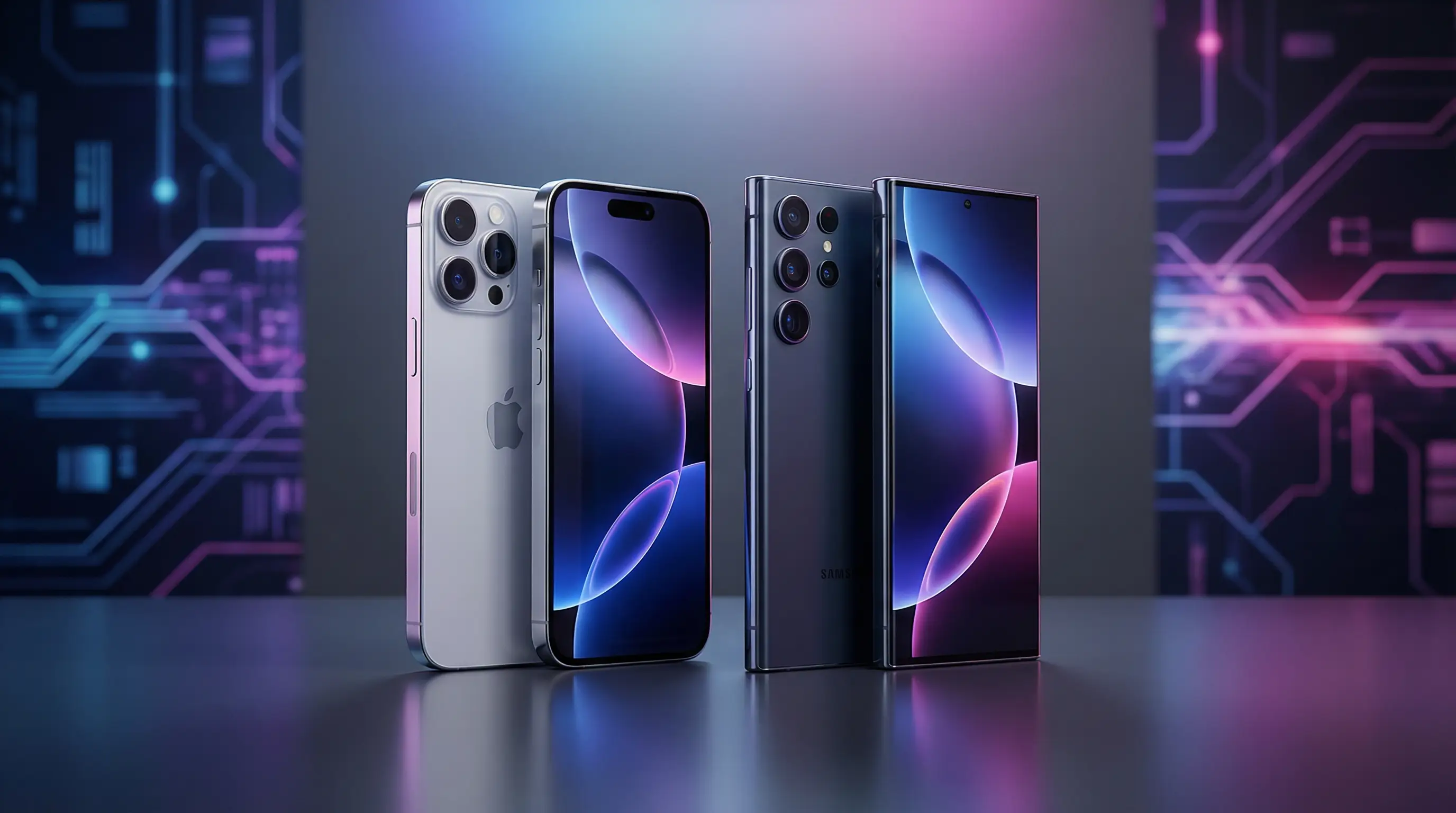
The smartphone wars have reached 2026, and the iPhone 17 and Galaxy S26 Ultra are the two biggest flagships fighting for your attention. I’ve been following the reviews and spec sheets closely, and here’s what you need to know before dropping $1,000+ on either one.
Design and Build Quality
The iPhone 17 sticks with Apple’s aluminum frame and color-infused glass back. It’s light—really light at 177 grams—and the Ceramic Shield 2 actually does hold up better against scratches than before. The 6.3-inch size fits comfortably in most hands.
Samsung went bigger and heavier with the S26 Ultra. The titanium frame feels solid, but at 214g, you’ll notice it in your pocket. That 6.9-inch display is massive, which is great for watching videos but makes one-handed use a stretch.
Both phones feel premium. The iPhone wins on ergonomics if you have smaller hands or value pocketability.
Display Comparison
| Specification | iPhone 17 | Galaxy S26 Ultra |
|---|---|---|
| Screen Size | 6.3 inches | 6.9 inches |
| Resolution | 2622 x 1206 | 3120 x 1440 |
| Refresh Rate | 1-120Hz ProMotion | 1-120Hz LTPO |
| Peak Brightness | 3000 nits | 2600 nits |
| Protection | Ceramic Shield 2 | Gorilla Armor 2 |
The iPhone hits 3000 nits peak brightness—brighter than Samsung’s 2600 nits, though both are plenty visible outdoors. Samsung’s higher resolution is noticeable if you look closely, but honestly, both screens are gorgeous.
Camera Systems
Here’s where things get interesting. The iPhone 17 keeps it simple: 48MP main + 48MP ultrawide. Apple’s computational photography is still the best in the business for getting natural-looking shots without thinking too much.
Samsung went crazy with hardware: 200MP main, 10MP 3x telephoto, 50MP 5x periscope, and 50MP ultrawide. The zoom range is insane compared to what Apple offers—if you care about zooming in far, Samsung wins by a mile.
For everyday photos in good light, both are fantastic. Portrait mode works well on both. Samsung’s colors tend to pop more, which some people love and others find overprocessed. Apple keeps things more muted.
Video Performance
Video is still iPhone’s strength. The 4K footage at 60fps looks incredible, and stabilization is top-notch. Samsung can shoot 8K, which is technically impressive but practically useless for most people. For vlogs and social media, iPhone remains the safer bet.
Performance and Battery Life
The iPhone 17 runs on Apple’s A19 chip. The Galaxy S26 Ultra uses Qualcomm’s Snapdragon 8 Elite Gen 5, which has actually beaten Apple’s chip in some Geekbench tests. Performance-wise, you’re not going to notice a difference in daily use—both are insanely fast.
Battery is where it gets complicated. The iPhone’s 3692mAh sounds small, but Apple magic makes it last all day. The Samsung’s 5000mAh gives you more runway if you’re pushing it hard.
Charging: Samsung’s 60W beats Apple’s estimated 30W, so if you’re always running low, Samsung fills up faster.
Software and Ecosystem
iOS 26 and One UI 8.5 are both solid. Your ecosystem matters here. If you’re already deep in Apple products—AirPods, Watch, Mac—the iPhone integration is seamless. Samsung’s DeX and S Pen are genuinely useful if you need to be productive on the go, but they won’t convert an Apple user.
Both promise 7 years of updates, which is impressive and means either phone will last you a long time.
The Verdict
The iPhone 17 is the better phone for most people. It’s compact, takes great photos with zero effort, and integrates beautifully if you already use Apple products.
But the Galaxy S26 Ultra makes more sense if:
- You want the S Pen for notes or drawings
- Zoom photography matters to you
- You need a bigger screen for work
- Faster charging is a priority
- You’re already in Samsung’s ecosystem
Either way, you’re getting an excellent phone. It really comes down to what ecosystem you’re already invested in and whether size matters to you.