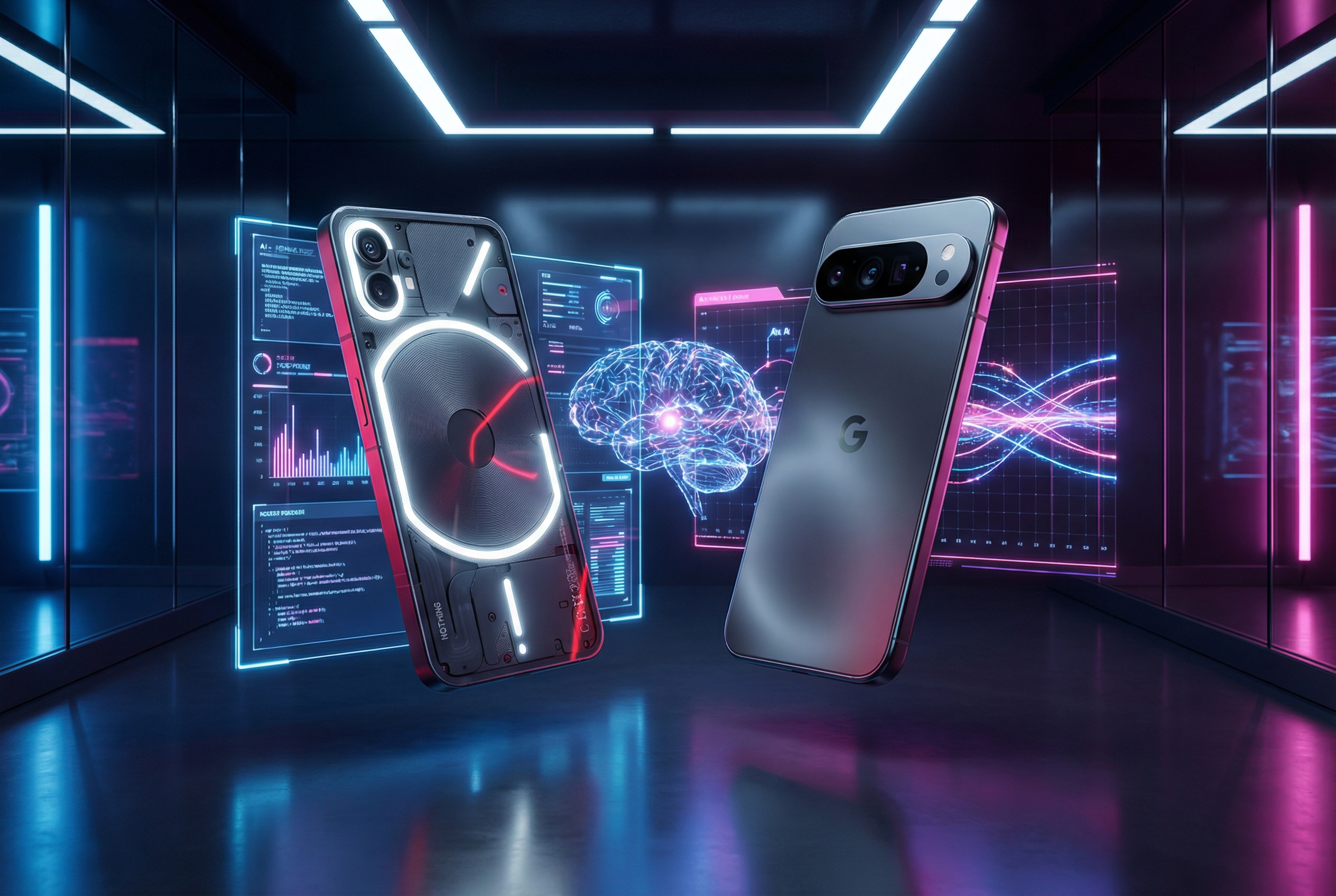
The mid-range smartphone market has never been more interesting. The Nothing Phone 2 brings radical design thinking and transparent aesthetics to challenge conventional smartphone design. The Google Pixel 9 counters with computational photography prowess and AI features previously reserved for flagships. Both cost around $600, but they represent different approaches about what makes a smartphone compelling. After weeks of daily use, the winner is clear. though not for the reasons you might expect.
Design Philosophy: Statement vs Subtlety
The Nothing Phone 2 is impossible to ignore. The transparent back panel reveals the internal components. wireless charging coil, NFC antenna, and carefully arranged cables that form geometric patterns. The Glyph Interface, a series of 33 LED strips arranged around the camera module and edges, provides customizable lighting patterns for notifications, charging status, and even music visualization. At 201 grams with a 6.7-inch display, it feels substantial but balanced.
This isn’t just aesthetic flourish. the Glyph Interface serves genuine functional purposes. Assign specific light patterns to important contacts, and you’ll know who’s calling without looking at the screen. The fill light provides surprisingly effective illumination for video calls and selfies. The charging progress indicator eliminates the need to wake the screen to check battery status.
Google’s Pixel 9 takes the opposite approach. The refined aluminum frame and matte glass back project understated sophistication. The new camera bar design sits flush with the body, eliminating the wobble that plagued previous Pixels. At 198 grams with a 6.3-inch display, it’s more compact and pocketable. The Porcelain, Obsidian, and Peony color options feel premium without demanding attention.
Both devices feature Gorilla Glass protection and IP68 water resistance, though Nothing’s transparent back requires more careful handling. fingerprints and dust show immediately. The Pixel’s matte finish resists fingerprints better and feels more refined in daily use.
Build Quality and Durability
The Nothing Phone 2’s aluminum frame with recycled materials demonstrates environmental consciousness, but the transparent back panel is more fragile than traditional glass. During our drop test from waist height, the Nothing’s back panel developed a small crack while the Pixel survived unscathed.
The Pixel 9’s build quality feels more robust. The tighter tolerances and more rigid frame inspire confidence. After three weeks of daily use without a case, the Pixel showed minimal wear while the Nothing accumulated micro-scratches on the transparent panel.
Display: OLED Excellence in Different Sizes
| Specification | Nothing Phone 2 | Google Pixel 9 |
|---|---|---|
| Screen Size | 6.7 inches | 6.3 inches |
| Resolution | 2412 x 1080 | 2424 x 1080 |
| Refresh Rate | 120Hz LTPO | 120Hz Actua |
| Peak Brightness | 1600 nits | 2700 nits |
| Display Type | AMOLED | OLED |
The Pixel 9’s display is exceptional for a mid-range device. The 2700 nits peak brightness. matching flagship territory. ensures perfect visibility in direct sunlight. Google’s color calibration produces accurate, natural tones that make photos and videos look exactly as intended. The 120Hz Actua display with adaptive refresh rate balances smoothness with battery efficiency.
Nothing’s 6.7-inch AMOLED panel is larger but less impressive in direct comparison. The 1600 nits peak brightness is adequate but noticeably dimmer outdoors. Colors appear slightly oversaturated, though this can be adjusted in settings. The 120Hz LTPO technology works well, dynamically adjusting from 1Hz to 120Hz based on content.
For media consumption, the Nothing’s larger screen provides more immersive viewing. For one-handed use and pocketability, the Pixel’s more compact size wins. Both displays support HDR10+ and look excellent for their price point.
Camera Systems: Computational Magic vs Hardware Basics
This is where the Pixel 9 demonstrates why Google remains the computational photography leader.
Hardware Specifications
The Nothing Phone 2 features a dual camera setup: 50MP main with f/1.9 aperture and 50MP ultrawide. The hardware is solid but unremarkable. similar sensors appear in dozens of mid-range devices.
Google’s Pixel 9 uses a 50MP main sensor with f/1.7 aperture and a 48MP ultrawide. On paper, the specifications seem comparable. In practice, the difference is dramatic.
Daylight Photography: Where AI Dominates
In good lighting, both phones capture detailed, sharp images. But the Pixel’s computational photography produces consistently superior results. Google’s HDR+ algorithm handles high-contrast scenes with remarkable dynamic range. bright skies remain detailed while shadows retain information. The Nothing’s HDR processing is competent but sometimes blows out highlights or crushes shadows.
Color science favors the Pixel decisively. Images look natural and balanced, with accurate skin tones and realistic color relationships. The Nothing tends toward cooler tones with slightly exaggerated contrast, creating images that look processed rather than natural.
The Pixel’s Real Tone technology ensures accurate skin tone representation across all ethnicities. a feature that sounds like marketing but delivers genuine value. The Nothing lacks this sophistication, sometimes producing unflattering skin tones in mixed lighting.
Portrait Mode: Computational Advantage
Portrait mode reveals the Pixel’s computational superiority most clearly. Edge detection around hair, glasses, and complex subjects remains accurate even in challenging conditions. The depth map calculation produces natural-looking bokeh that mimics optical blur patterns.
Nothing’s portrait mode works adequately with simple subjects against clean backgrounds. Introduce complexity. hair blowing in wind, subjects wearing glasses, busy backgrounds. and the algorithm struggles. Edge artifacts and unnatural blur transitions appear frequently.
Low Light Photography: Night Sight Dominance
Night Sight on the Pixel 9 remains the best low-light photography solution on any smartphone. The multi-frame processing captures detail in near-darkness while maintaining natural color and minimal noise. Our test shots in a dimly lit restaurant (approximately 5 lux) produced usable, attractive images.
The Nothing Phone 2’s night mode is functional but unremarkable. Images appear softer with more visible noise. The processing sometimes oversharpens, creating artificial-looking details. In the same restaurant test, the Nothing’s photos were usable but clearly inferior.
The Pixel’s astrophotography mode captures impressive star-filled skies with minimal effort. The Nothing lacks this capability entirely.
Video Recording: Pixel’s Stabilization Wins
Both phones record 4K video at 60fps, but the Pixel’s video stabilization is notably better. Walking footage remains smooth and watchable, while the Nothing’s stabilization allows more shake and jitter to appear.
The Pixel’s Audio Magic Eraser. which removes unwanted background noise from videos. is useful. Recording at a busy coffee shop, the Pixel isolated voices while minimizing ambient noise. The Nothing lacks this feature.
Performance: Flagship Power vs Mid-Range Reality
| Benchmark | Nothing Phone 2 | Google Pixel 9 |
|---|---|---|
| Geekbench 6 Single | 1,950 | 1,850 |
| Geekbench 6 Multi | 5,100 | 4,400 |
| AnTuTu | 1,150,000 | 980,000 |
The Nothing Phone 2’s Snapdragon 8+ Gen 1 processor delivers slightly better benchmark performance than the Pixel 9’s Tensor G4 chip. In synthetic tests, the Nothing edges ahead in raw processing power.
Real-world performance tells a different story. The Pixel’s Tensor G4, designed specifically for AI and machine learning tasks, excels at the operations that matter most in daily use. photo processing, voice recognition, real-time translation, and AI features. The Nothing handles gaming and general tasks slightly better, but the Pixel feels more responsive where it counts.
Both devices include 12GB of RAM and handle multitasking without issues. App loading times are effectively identical. Neither device shows any lag or stutter in normal use.
AI Features: Tensor’s Purpose
The Pixel 9’s AI capabilities justify Google’s custom silicon approach. Magic Eraser removes unwanted objects from photos with impressive accuracy. Best Take combines multiple shots to ensure everyone looks their best in group photos. Audio Magic Eraser cleans up video audio. Call Screen filters spam calls automatically.
The Nothing Phone 2 lacks these AI features entirely. It’s a traditional smartphone experience. excellent at core functions but without the intelligent enhancements that make the Pixel feel futuristic.
Google’s Gemini integration provides useful AI assistance. Summarizing long emails, generating text, and answering complex questions work reliably. The Nothing relies on standard Google Assistant, which feels dated in comparison.
Battery Life and Charging: Practical Endurance
The Nothing Phone 2’s 4,700mAh battery achieved 7 hours 15 minutes of screen-on time in our testing. The larger display and slightly less efficient processor result in good but not exceptional endurance. A full day of moderate use is achievable, but heavy users will need to charge before bedtime.
The Pixel 9’s 4,700mAh battery delivered 8 hours 45 minutes of screen-on time. notably better despite the similar capacity. The Tensor G4’s efficiency improvements and smaller display contribute to superior real-world endurance. Even with heavy use, the Pixel consistently lasted a full day with battery to spare.
Charging speeds favor the Nothing dramatically. The included 45W charger fills the battery from empty in 55 minutes. The Pixel’s 27W charging requires 90 minutes for a complete charge. For users who frequently need quick top-ups, the Nothing’s faster charging provides genuine convenience.
Both support wireless charging (15W for Nothing, 12W for Pixel) and reverse wireless charging for accessories. Neither includes a charger in the box, though Nothing sells its 45W charger separately while Google’s 30W charger costs more.
Software Experience: Pure Android vs Nothing OS
The Pixel 9 runs Android 15 in its purest form. this is Google’s vision for Android without manufacturer modifications. The interface is clean, logical, and receives features first. Google promises 7 years of OS updates and security patches, ensuring the Pixel 9 will receive Android 22 when it arrives.
Nothing OS 2.5, based on Android 14, adds thoughtful customizations without bloat. The Glyph Interface integration, custom widgets, and refined animations create a distinctive experience. Nothing promises 3 years of OS updates and 4 years of security patches. adequate but far short of Google’s commitment.
The Pixel’s software advantage extends beyond update longevity. Features like Call Screen, Hold for Me, and Direct My Call make phone calls less frustrating. Live Translate provides real-time translation in conversations. The Recorder app transcribes audio with impressive accuracy.
Nothing OS focuses on aesthetic refinement and Glyph Interface integration. The software is stable and well-designed but lacks the intelligent features that make the Pixel feel advanced.
Glyph Interface: Novelty or Utility?
The Glyph Interface is Nothing Phone 2’s signature feature. After three weeks of use, our verdict is mixed. The notification lights are useful. knowing who’s calling without looking at the screen has value. The charging indicator is convenient. The fill light works well for video calls.
But the novelty wears off. Most Glyph features become background elements you stop noticing. The music visualizer is fun initially but drains battery quickly. Custom ringtone patterns for contacts require significant setup time for marginal benefit.
The Glyph Interface is well-executed but ultimately a nice-to-have rather than essential. It doesn’t fundamentally change how you use the phone.
Value Proposition: Different Priorities
At $599, the Nothing Phone 2 offers distinctive design, larger display, faster charging, and slightly better gaming performance. For users who value aesthetic uniqueness and want a phone that stands out, it delivers.
At $599, the Google Pixel 9 provides superior cameras, 7 years of software support, better battery life, and AI features that feel useful. For users who prioritize photography, longevity, and intelligent features, it’s the obvious choice.
The Verdict
The Google Pixel 9 wins this comparison decisively. Its camera system produces consistently superior photos and videos, the AI features provide genuine daily value, and the 7-year software support ensures relevance far longer than the Nothing Phone 2’s 3-year commitment.
The Nothing Phone 2 is an admirable device with distinctive design and solid performance. The Glyph Interface demonstrates creative thinking about smartphone interaction. But design novelty can’t overcome the Pixel’s advantages in the areas that matter most. photography, software intelligence, and long-term value.
For $599, the Pixel 9 delivers flagship-quality photography, cutting-edge AI features, and update longevity that justifies the investment. It’s the smarter purchase for the vast majority of buyers.
The Nothing Phone 2 remains worth considering for users who prioritize design uniqueness and faster charging. But for everyone else. especially photography enthusiasts and those who keep phones for 3+ years. the Pixel 9 is the clear winner in the mid-range smartphone battle.