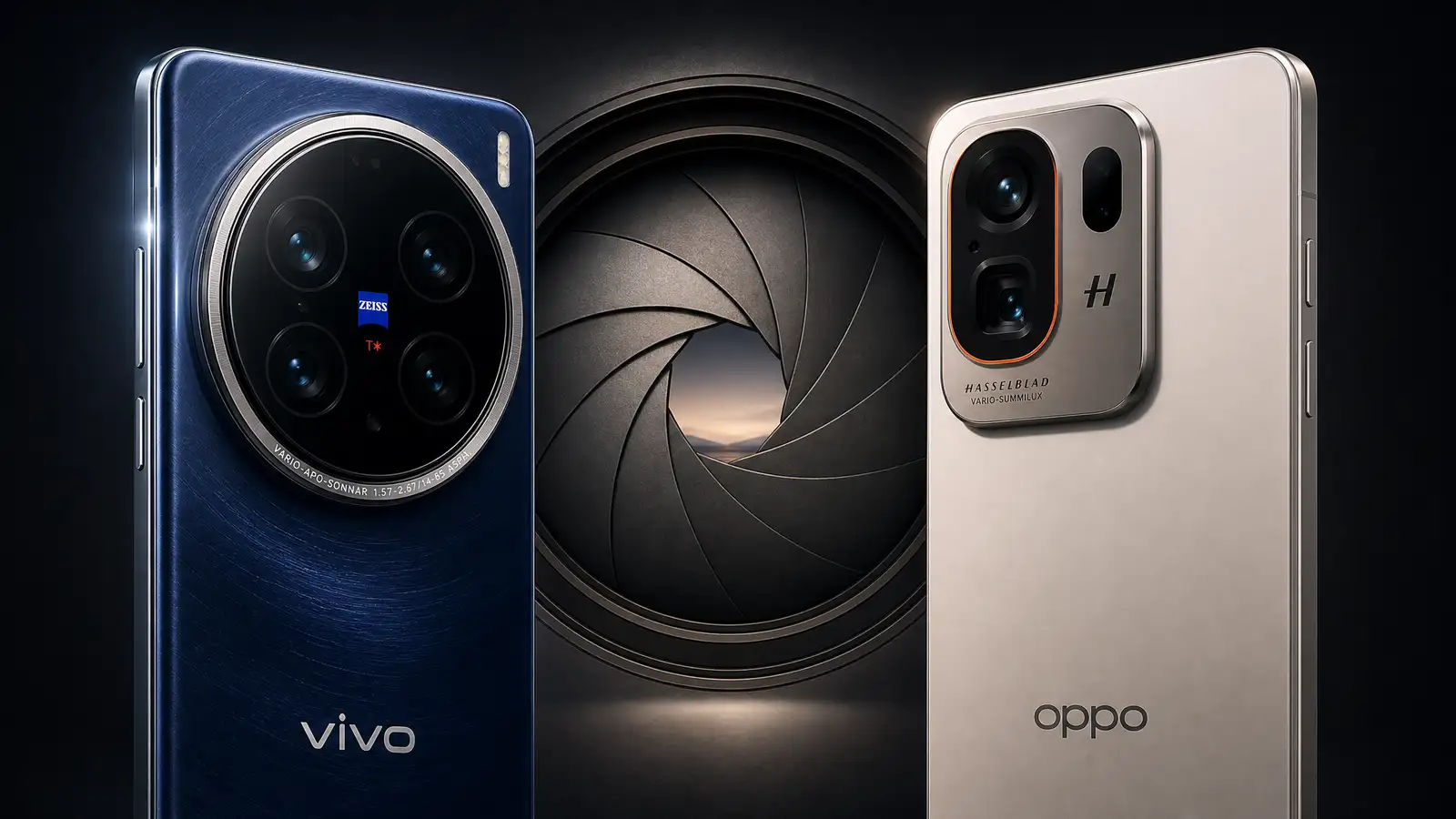
Not everyone wants a Samsung or an iPhone. Vivo and OPPO — two Chinese manufacturers under the same parent company, BBK Electronics — make phones that push camera hardware further than any Western flagship. The X200 Pro and Find X9 Pro both have 1-inch camera sensors, periscope zooms, and Zeiss or Hasselblad tuning that produces photos you will not get from a Galaxy or iPhone.
The catch: availability. These phones are primarily sold in China, India, and select markets. But they are worth understanding because they preview camera technology that eventually trickles down to the phones you can buy easily. Here is how they compare.
Cameras
The Vivo X200 Pro camera system is extraordinary. The 1-inch 50MP main sensor (Sony LYT-900) produces natural colors, excellent dynamic range, and shallow depth of field that rivals dedicated cameras. The 200MP periscope telephoto with 3.7x optical zoom is the star — it captures detail at 10x that other phones cannot match. Zeiss T* coating reduces lens flare. Portrait mode with Zeiss lens simulations (Biotar, Sonnar, Planar) creates bokeh that looks like it came from expensive glass.
The OPPO Find X9 Pro has a 1-inch 50MP main sensor (also Sony LYT-900) with Hasselblad color tuning that produces slightly warmer, more film-like colors than Vivo’s neutral approach. The 50MP periscope telephoto does 6x optical zoom with excellent sharpness. The Hasselblad portrait mode is more restrained than Vivo’s Zeiss simulations — natural bokeh with accurate skin tones.
Both take spectacular photos that compete with dedicated cameras in good light. Vivo’s telephoto is more versatile. OPPO’s color science is more cinematic. Both are ahead of Apple and Samsung for still photography.
Video
Both phones shoot 8K video with excellent stabilization. The Vivo has a slight edge in low-light video thanks to better noise reduction. The OPPO has better microphone audio quality. Neither matches the iPhone for overall video consistency, but they are closer than ever.
Design and Build
The Vivo X200 Pro has a massive circular camera bump that dominates the back — it looks like a professional camera and feels like one too. The glass back and aluminum frame feel premium. The phone is large and heavy at 225 grams.
The OPPO Find X9 Pro is slightly smaller with a more understated camera design. The vegan leather back option adds grip and warmth. It is lighter at 210 grams. It feels more like a normal phone that happens to have an incredible camera.
Both are premium and well-built. The Vivo is unapologetically camera-first. The OPPO is more balanced.
Software
Vivo’s FunTouch OS and OPPO’s ColorOS are both Android skins with their own design languages and feature sets. ColorOS is cleaner and closer to stock Android. FunTouch OS has more customization but more bloatware. Neither is as polished as One UI or iOS, but both have improved significantly.
Software support: two to three years of Android updates, three to four years of security patches. This is the biggest weakness — Samsung offers four to seven years.
If software longevity matters to you, neither of these phones is the right choice. They are hardware-first devices.
Verdict
The Vivo X200 Pro is the best camera phone in the world for still photography. The 1-inch sensor and 200MP telephoto produce images that make professional photographers do a double-take. If you care about photography above everything else and can buy one, it is worth the hassle.
The OPPO Find X9 Pro is the more balanced flagship with an excellent camera, better software, and a more refined design. If you want a top-tier camera phone that also feels like a normal premium smartphone, OPPO delivers.
Both are niche recommendations for enthusiasts willing to import. For most people, the Galaxy S26 Ultra or iPhone 17 Pro Max are easier to buy and better-supported. But if camera hardware excites you, these Chinese flagships show where smartphone photography is headed.