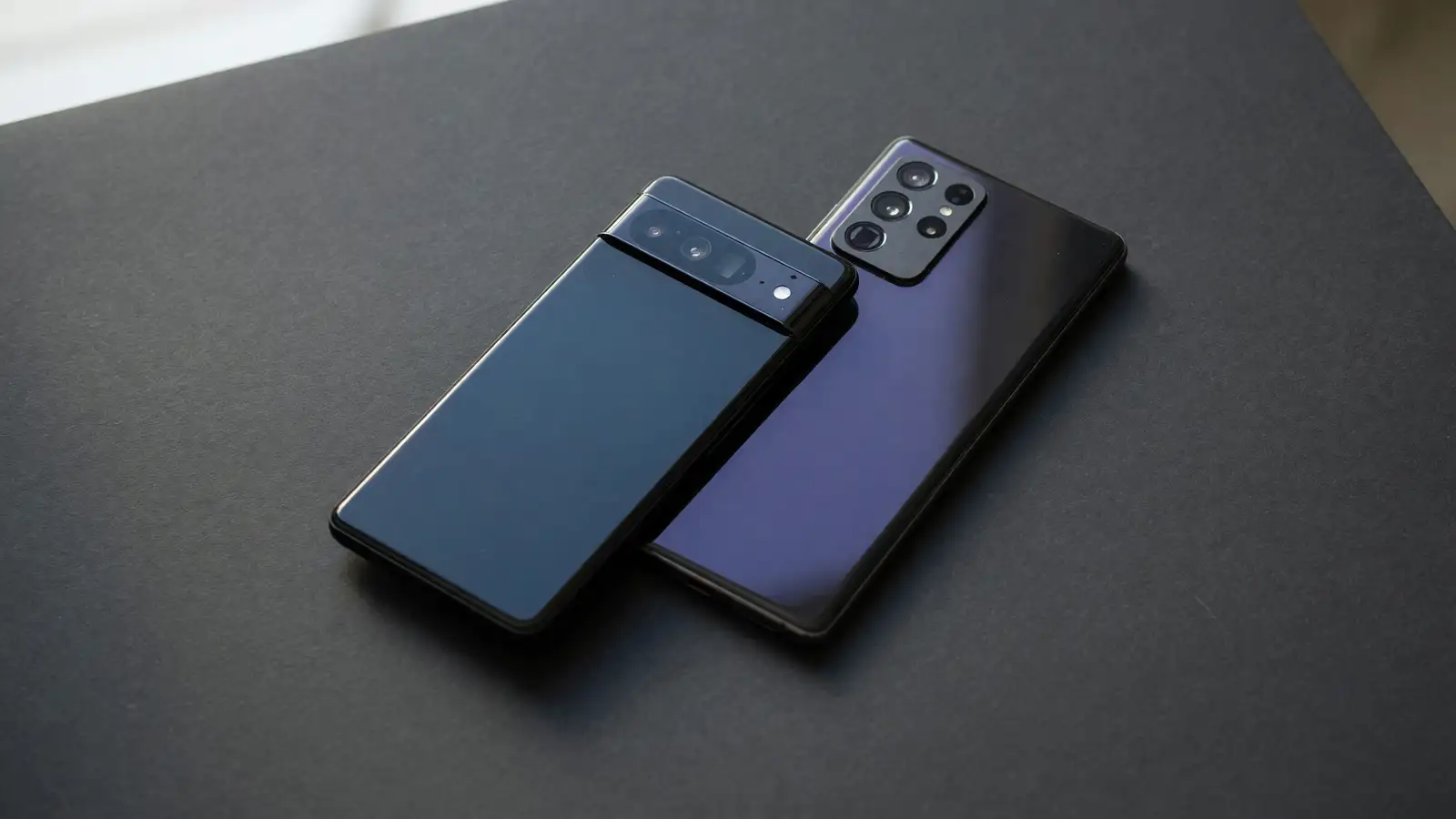
Pixel 11 Pro vs Galaxy S26 Ultra: Who Still Needs the Cloud?
We already ran Pixel 11 Pro against iPhone 17 Pro and iPhone 17 Pro against the S26 Ultra. This week’s reviews finally fill the Android-to-Android hole: Florence Ion at PCMag on September 2, plus Android Police and Android Authority living with the Pixel 11 Pro.
The split is not taste. It is where the pixels get processed. The Pixel 11 Pro still sends 8K video to Google’s servers. The Galaxy S26 Ultra records 8K30 and 4K120 on the phone. If you shoot in a basement, on a plane, or on a job that cannot leave the device, that is the review.
Size and the hand
Android Police lists the Pixel 11 Pro at 152 x 71.9 x 8.4 mm and 204 grams, with a 6.3-inch Super Actua panel. Colors: Canyon, Olive, Fog, Obsidian. IP68. Gorilla Glass Victus 2. It is a phone you can use one-handed without a stretch to the far corner.
Android Headlines’ S26 Ultra guide puts Samsung at 163.6 x 78.1 x 7.9 mm and 214 grams, with a 6.9-inch 3120 x 1440 panel running 1-120Hz. Android Authority’s line is blunt: the Ultra comes in one size, and the size is big. There are no built-in magnets. The Pixel 11 Pro has Qi 2.2 magnets. If you live on a car mount or a MagSafe-style wallet, that is not a footnote.
Samsung’s anti-reflective coating is the outdoor win. Android Police says the Pixel is bright enough outside and still cannot match the Ultra. If your commute is noon sidewalks, buy the screen. If your commute is a jacket pocket, buy the Pixel.
Video is the actual flagship test
PCMag’s complaint is specific. The Pixel 11 Pro and 11 Pro XL top out at 4K60 on-device. That is better than the Pixel 10 Pro, which offloaded most rendering. 8K on the 11 Pro requires Video Boost to be on before you hit record so the phone knows to upload. Then you wait.
The iPhone 17 Pro, Ion notes, can record high-frame-rate Dolby Vision in Airplane Mode. The S26 Ultra does not need the cloud for 8K30. Qualcomm’s Adreno path is what pushes 4K120 locally. Tensor G6 is built around Gemini features. Snapdragon 8 Elite Gen 5 is built around moving a lot of pixels without asking a datacenter for help.
This is not an abstract silicon argument. It is whether a parent at a school play with bad reception gets the file when they leave the auditorium. Video Boost can look great. It is also a queue.
Still photos are a different fight. The Pixel 11 Pro’s rear trio, per Android Police, is 50MP main, 48MP ultrawide, 48MP 5x tele, plus a 42MP front camera. The S26 Ultra stacks a 200MP main (f/1.4, 1/1.3-inch), 50MP ultrawide at 120 degrees, 10MP 3x, and 50MP 5x periscope. More glass, more zoom options, more weight. Pixel still has the computational stills reputation. Samsung has the zoom chart. If your “camera phone” means portraits at dinner, the Pixel is not behind. If it means a soccer sideline at 5x and 8K, it is.
Video Boost is not a scam. It is a render farm. If you have Wi-Fi at home and you can wait until dinner for the file, Google’s cloud stack has been good at cleaning rolling shutter and lifting shadows. The cost is that the original clip is not the deliverable. The deliverable is whatever comes back. For a YouTuber with a backup camera, that is a flavor. For a reporter who has to file from a parking lot, it is a veto. PCMag’s $1,100 line is the right one: at that price, local performance should not be optional.
Airplane Mode is a useful lab. Put both phones in it and record a minute of 4K. The Ultra should hand you a file. The Pixel should hand you 4K60, and it should refuse the 8K path Ion describes. If your work never needs more than 4K60, this whole section is noise. A lot of people who buy “Pro” phones say they need 8K and then publish 1080p. Be honest with yourself before you pay for silicon you will not use.
Ports, radios, and the boring spec sheet
Pixel 11 Pro: USB-C 3.2, Wi-Fi 7, Bluetooth 6, Android 17. S26 Ultra: Wi-Fi 7, Bluetooth 5.4, Android 16 with One UI 8.5. The USB-C 3.2 note on the Pixel is the one that matters for offloading 4K60 without waiting on USB 2 speeds. Samsung’s buyers guide did not highlight a port generation in the chunk we have, so do not assume. If you dump cards into an editor every night, test the cable.
Bluetooth 6 versus 5.4 will not change your week. Wi-Fi 7 on both will, if your router is new. IP68 on the Pixel is confirmed; treat the Ultra as a flagship that should also survive a sink, but do not dunk either on purpose.
Performance numbers from this week’s benches
Android Police published the tables. They are ugly for Tensor.
| Phone | Geekbench 7 single | multi | GPU |
|---|---|---|---|
| Pixel 11 Pro | 2335 | 7245 | 3286 |
| Galaxy S26 Ultra | 2970 | 10269 | 17107 |
| Phone | 3DMark Wild Life Extreme (best loop) | stability | battery drain |
|---|---|---|---|
| Pixel 11 Pro | 3325 | 64% | 11% |
| Galaxy S26 Ultra | 7431 | 55% | 13% |
The Pixel did not get hot in Asphalt 9. That is the right test for most people. The GPU gap is the test for 4K120 and for games that are not Asphalt. Base Pixel 11 Pro RAM is 12GB, with 16GB higher up. Same RAM split on the Ultra (12/16GB LPDDR5X). Storage on both: 256GB / 512GB / 1TB, no microSD on the Samsung.
If you do not benchmark, you will feel this as heat and as dropped frames in video, not as a Geekbench screenshot. If you do benchmark, stop pretending Tensor is in the same class as Elite Gen 5.
Charging and the hour you actually wait
Android Authority timed the bricks. Pixel 11 Pro 0-100: 86 minutes, basically identical to the Pixel 10 Pro’s 87. The 11 Pro XL’s 45W is 64 minutes. The S26 Ultra’s 60W is 42 minutes, dead to full. Samsung also lists 15W wireless and reverse wireless; a charger is not in the box.
4850 mAh in the Pixel versus 5000 mAh in the Ultra is not the story. The story is lunch. Forty-two minutes versus eighty-six is a meeting you make or miss.
Pixel software still has the cleaner daily path. Seven years of Android updates, Android 17 on the 11 Pro according to Android Police, magnets, and no One UI. The Ultra ships Android 16 with One UI 8.5. Authority calls One UI heavy. That is fair if you have been on Pixel. It is also how you get DeX-ish desktop tricks and Samsung’s Privacy Display, which Authority lists as a reason to pay the extra.
Privacy Display is Samsung selling a hardware answer to shoulder-surfing. I have not seen a lab measurement in this week’s Pixel reviews, so treat it as a named feature, not a score. Magnets are the Pixel’s hardware answer to a different annoyance: cases and mounts that actually click. Authority treats the missing magnets on the Ultra as a real miss. After a year of Qi2 accessories, it is.
Daily software is where people stay or leave. Pixel’s settings tree is shorter. Notifications behave. Gesture nav does not fight you. One UI still adds a second clock app, a second file app, and a Samsung account prompt. If that sentence made you tired, you are a Pixel buyer. If you already live in Good Lock, you are not.
The 12GB base RAM on the Pixel is the other software-adjacent catch. Android Police flags it. 16GB is the configuration that matches how long you keep Chrome tabs and a camera app in memory. Spend the RAM upcharge if you are staying for seven years.
Price, and who should spend it
S26 Ultra: $1,299.99 / $1,499.99 / $1,799.99 for 256 / 512 / 1TB, per Android Headlines. Samsung’s own trade-in page was advertising up to $900 when that guide was updated, which is how an Ultra lands closer to Pixel money if you have a recent flagship to send in. Pixel 11 Pro starts around $1,100 in PCMag’s framing. You can spend Ultra money on a Z Flip 8 or a Razr Ultra if you want a fold instead of a slab. This comparison assumes you want a slab.
Do the math on storage too. 256GB fills up if you keep original 4K60 and the Video Boost copies. The 512GB SKU is the one that matches how these cameras actually get used. The 1TB Ultra at $1,799.99 is for people who refuse a laptop on a trip.
The mid-range fight on this site is a different budget: Pixel 10a vs Galaxy A56. Do not cross-shop those with these two. These are the phones you buy when you have already decided to spend four figures and you are arguing about video, not about surviving the year.
Pixel 11 Pro is the better phone if you want 6.3 inches, magnets, stock-ish Android, and stills that look like Pixel stills. You do not shoot 8K. You do not care about 4K120. You charge overnight.
Galaxy S26 Ultra is the better phone if you record video that cannot wait on an upload, you want 4K120 and 8K30 on the device, you want the brighter 6.9-inch panel, and you will use 60W. You can live with One UI and a tall rectangle.
Winner here is the Ultra, on the evidence that showed up this week. The Pixel 11 Pro is easy to like in a pocket. It is harder to defend once someone asks where the 8K file is. If Google wants that argument to die, Video Boost has to become a local encode, not a loading bar.