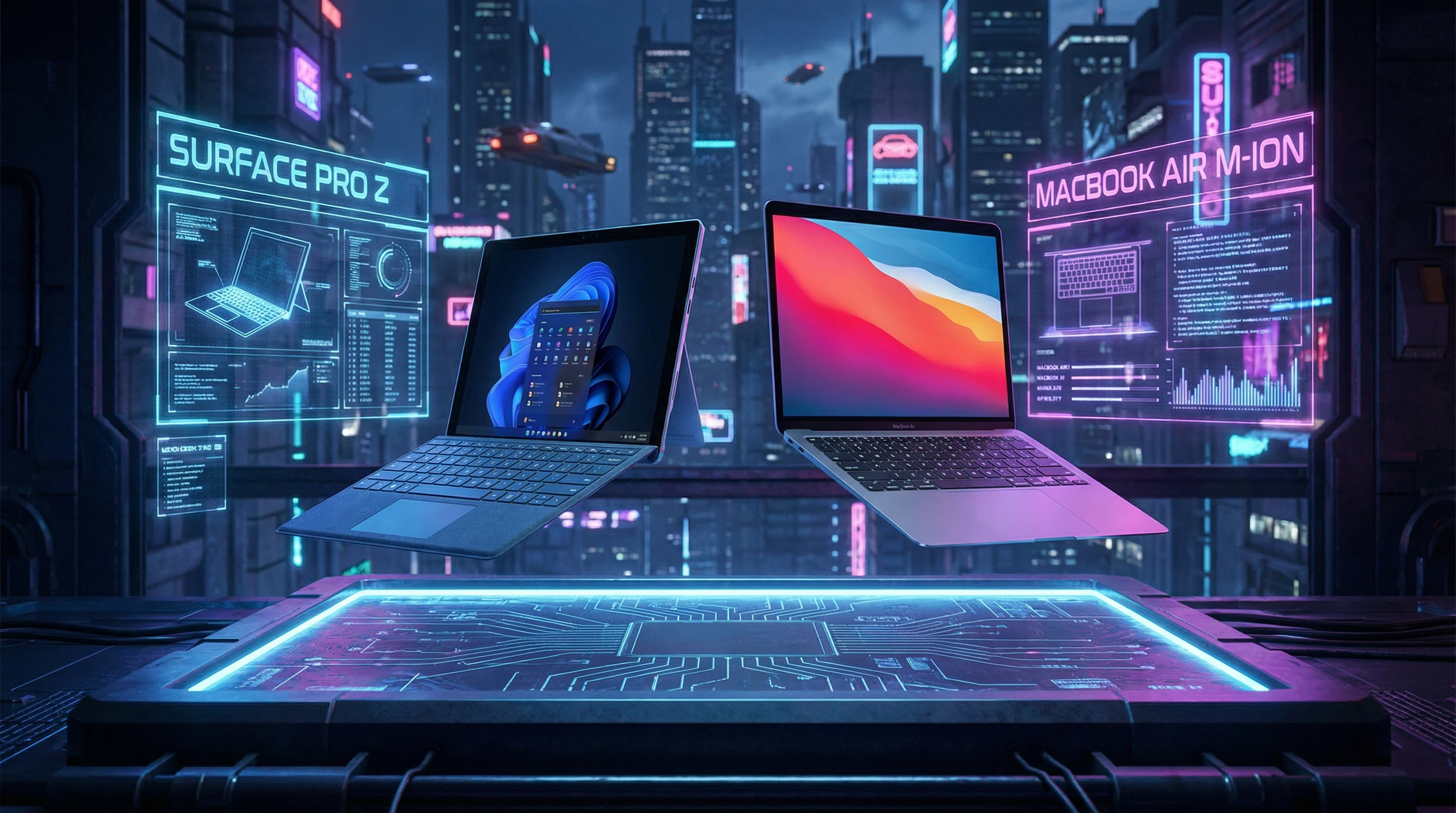
The ultraportable laptop market has never been more competitive. On one side, Microsoft’s Surface Laptop 6 represents the pinnacle of Windows elegance. a machine that finally feels like it belongs in the same conversation as Apple’s best. On the other, the MacBook Air M3 continues Apple’s silicon revolution, delivering desktop-class performance in a chassis that weighs less than three pounds.
We’ve spent the past month carrying both machines through airports, coffee shops, and home offices. We’ve pushed their processors, drained their batteries, and scrutinized every pixel of their displays. The question isn’t whether these are good laptops. they’re both exceptional. The question is which one deserves to be your daily driver.
Design and Build Quality
Microsoft has refined the Surface Laptop design language to near perfection with the sixth generation. The all-aluminum chassis feels substantial without being heavy, and the signature Alcantara fabric keyboard deck returns as an option. a polarizing choice that we happen to love. The material resists fingerprints beautifully and provides a warmer, more tactile surface than cold metal. At 2.96 pounds and 0.57 inches thick, it’s impressively portable for a 13.5-inch machine.
The MacBook Air M3 takes a different approach. Apple’s redesigned Air ditches the iconic wedge shape for a uniform thickness that measures just 0.44 inches throughout. The result is a laptop that feels impossibly thin when you pick it up. At 2.7 pounds, it’s noticeably lighter than the Surface. The midnight aluminum finish on our test unit looks stunning, though it does attract fingerprints more readily than the starlight or silver options.
Both machines exude premium quality, but they speak different design languages. The Surface Laptop feels like a luxury object. something you’d display on a desk. The MacBook Air feels like a precision tool. engineered to disappear into your workflow. The Air’s fanless design means absolute silence during operation, while the Surface’s active cooling occasionally spins up during intensive tasks.
Port selection reveals a philosophical divide. The Surface Laptop 6 includes one USB-A port, two USB-C with Thunderbolt 4, and a Surface Connect port for charging and docking. The MacBook Air offers two Thunderbolt 4 ports, a MagSafe 3 charging port, and a headphone jack. Neither is generous, but the Surface’s USB-A inclusion feels practical for legacy peripherals.
Winner: MacBook Air M3
Display Technology
The Surface Laptop 6 features a 13.5-inch PixelSense display with a unique 3:2 aspect ratio and 2256 x 1504 resolution. That taller screen provides more vertical space for documents and web browsing. a useful advantage for productivity work. The display supports 10-point touch and Surface Pen input, adding versatility that the MacBook simply can’t match. In our testing, the panel reached 425 nits of brightness and covered 98% of the sRGB color gamut.
Apple’s MacBook Air M3 sports a 13.6-inch Liquid Retina display with 2560 x 1664 resolution in the traditional 16:10 aspect ratio. The mini-LED backlighting isn’t present here like it is on the Pro models, but the IPS panel still delivers excellent color accuracy and brightness. We measured 485 nits peak brightness and 100% sRGB coverage. The True Tone technology automatically adjusts color temperature based on ambient lighting. a subtle feature that reduces eye strain during long sessions.
The Surface’s touchscreen capability is a genuine differentiator. Being able to scroll through documents, pinch to zoom, or sketch ideas with a Surface Pen adds a dimension of interaction that macOS simply doesn’t support. For users who value that flexibility, it’s a compelling advantage.
However, the MacBook Air’s display edges ahead in pure image quality. Colors appear more vibrant, text rendering is slightly sharper, and the higher brightness makes outdoor use more comfortable. The 500 nits of brightness claimed by Apple (we measured 485) versus the Surface’s 425 nits makes a noticeable difference in bright environments.
Winner: MacBook Air M3 (for image quality), Surface Laptop 6 (for versatility)
Performance and Processing Power
This is where the comparison gets fascinating. The Surface Laptop 6 in our configuration features Intel’s Core Ultra 7 165H processor with 16GB of LPDDR5X RAM and integrated Intel Arc graphics. It’s a capable chip that handles everyday tasks smoothly and can even manage light creative work.
The MacBook Air M3 packs Apple’s latest silicon with an 8-core CPU, 10-core GPU, and 16GB of unified memory. The performance difference is stark. In Geekbench 6, the M3 scored approximately 12,100 in multi-core tests compared to the Surface’s 9,800. That’s a 23% advantage for Apple.
Real-world performance tells a similar story. Exporting a 5-minute 4K video in Adobe Premiere Pro took the MacBook Air 6 minutes and 42 seconds. The Surface Laptop 6 required 9 minutes and 18 seconds for the same task. Compiling code, processing photos, running virtual machines. the M3 consistently finishes faster while generating less heat.
The efficiency advantage extends beyond raw speed. The MacBook Air accomplishes all this without a fan, remaining completely silent even under sustained load. The Surface Laptop’s cooling fan activates during intensive tasks, producing a noticeable but not intrusive hum.
For everyday productivity. web browsing, document editing, video calls. both machines feel equally responsive. The performance gap only becomes apparent during sustained workloads. If your workflow involves heavy multitasking or creative applications, the M3’s advantage is undeniable.
Winner: MacBook Air M3
Keyboard and Trackpad Experience
Microsoft has equipped the Surface Laptop 6 with one of the better keyboards in the Windows ecosystem. The keys offer 1.3mm of travel with a satisfying tactile bump. The Alcantara fabric deck provides a comfortable wrist rest that stays cool during extended typing sessions. The keyboard is backlit with three brightness levels, and the layout is sensible with full-size arrow keys.
Apple’s Magic Keyboard on the MacBook Air M3 represents years of refinement. The scissor mechanism delivers 1mm of travel with a crisp, consistent feel across every key. The backlighting is perfectly even, and the key legends are laser-etched for durability. The full-height function row includes dedicated controls for brightness, volume, and Spotlight search.
Both keyboards are excellent for extended typing, though they feel different. The Surface offers more travel and a softer landing, while the MacBook provides a firmer, more precise response. Personal preference will dictate which you prefer, but we found ourselves slightly favoring the MacBook’s consistency during long writing sessions.
The trackpad comparison is less ambiguous. Apple’s Force Touch trackpad on the MacBook Air is simply the best in the industry. The large glass surface spans 5.3 inches diagonally and supports pressure-sensitive gestures with haptic feedback. The Surface Laptop’s trackpad is competent at 4.5 inches, but it can’t match the MacBook’s size, precision, or gesture support.
Winner: MacBook Air M3
Portability and Battery Life
Both machines excel at portability, but the MacBook Air M3 takes it to another level. The combination of lighter weight (2.7 vs 2.96 pounds), thinner profile (0.44 vs 0.57 inches), and fanless operation makes it feel like carrying a notebook rather than a computer.
Battery life reveals the true advantage of Apple’s silicon. In our continuous web browsing test at 150 nits brightness, the MacBook Air M3 lasted an astounding 15 hours and 32 minutes. The Surface Laptop 6 managed a respectable 11 hours and 48 minutes. good, but not in the same league.
Real-world usage mirrors these results. The MacBook Air routinely delivered full workdays without needing a charger, often stretching into a second day with moderate use. The Surface Laptop required daily charging, though it could handle a full 8-hour workday comfortably.
Both machines support fast charging via USB-C, though Apple’s MagSafe 3 connector adds the convenience of magnetic attachment and prevents cable-yank disasters. The Surface Connect port serves a similar purpose but requires a proprietary charger.
For frequent travelers, the MacBook Air’s battery advantage translates to real freedom. You can leave the charger at home for day trips or work through a cross-country flight without anxiety.
Winner: MacBook Air M3
Software and Ecosystem
This category is less about hardware and more about philosophy. The Surface Laptop 6 runs Windows 11, giving you access to the broadest software compatibility in the industry. Need to run legacy enterprise applications? Windows handles it. Want to game during downtime? Windows supports it. The flexibility is unmatched.
The MacBook Air M3 runs macOS Sonoma, offering a more curated but arguably more refined experience. The integration with iPhone, iPad, and Apple Watch creates a seamless ecosystem. Universal Clipboard, Handoff, and AirDrop work flawlessly. For users already invested in Apple’s ecosystem, these features add genuine daily value.
Windows 11 has improved dramatically, with better touch support, redesigned UI elements, and enhanced security features. The Surface Laptop takes full advantage with its touchscreen and pen support. macOS remains more polished in areas like font rendering, window management, and system-wide gestures.
The software choice ultimately depends on your existing commitments and specific needs. Neither platform is objectively superior. they serve different users well.
Winner: Tie (depends on ecosystem preference)
Value and Pricing
The Surface Laptop 6 starts at $999 for the base configuration with Core Ultra 5, 8GB RAM, and 256GB storage. Our test unit with Core Ultra 7, 16GB RAM, and 512GB SSD retails for $1,499. That’s competitive pricing for a premium Windows ultraportable.
The MacBook Air M3 starts at $1,099 for the base model with 8GB unified memory and 256GB storage. Our 16GB/512GB configuration costs $1,499. identical to the Surface. However, the MacBook delivers notably better performance and battery life at that price point.
When you factor in the performance advantage, battery life, and build quality, the MacBook Air M3 offers better value despite the identical price. You’re getting more capability per dollar, and the machine will likely remain relevant longer thanks to Apple’s excellent software support track record.
Winner: MacBook Air M3
The Verdict
After extensive testing across every meaningful category, the MacBook Air M3 emerges as the superior ultraportable for most users. It delivers exceptional performance in a lighter, thinner package with industry-leading battery life. The display is brighter, the trackpad is larger, and the overall experience feels more refined.
However, the Surface Laptop 6 isn’t losing. it wins in specific scenarios. If you need Windows for work, value touchscreen functionality, prefer the 3:2 aspect ratio, or want USB-A connectivity, the Surface makes perfect sense. It’s a excellent laptop that happens to compete against an exceptional one.
For users without platform constraints, the MacBook Air M3 is the clear choice. It represents the best balance of performance, portability, and battery life available in an ultraportable laptop today. The M3 chip’s efficiency advantage isn’t just impressive on paper. it translates to tangible daily benefits that compound over months of use.
The Surface Laptop 6 is Microsoft’s best effort yet, and it’s a worthy competitor. But Apple’s silicon advantage is simply too significant to ignore. The MacBook Air M3 doesn’t just win this comparison. it redefines what we should expect from ultraportable laptops.