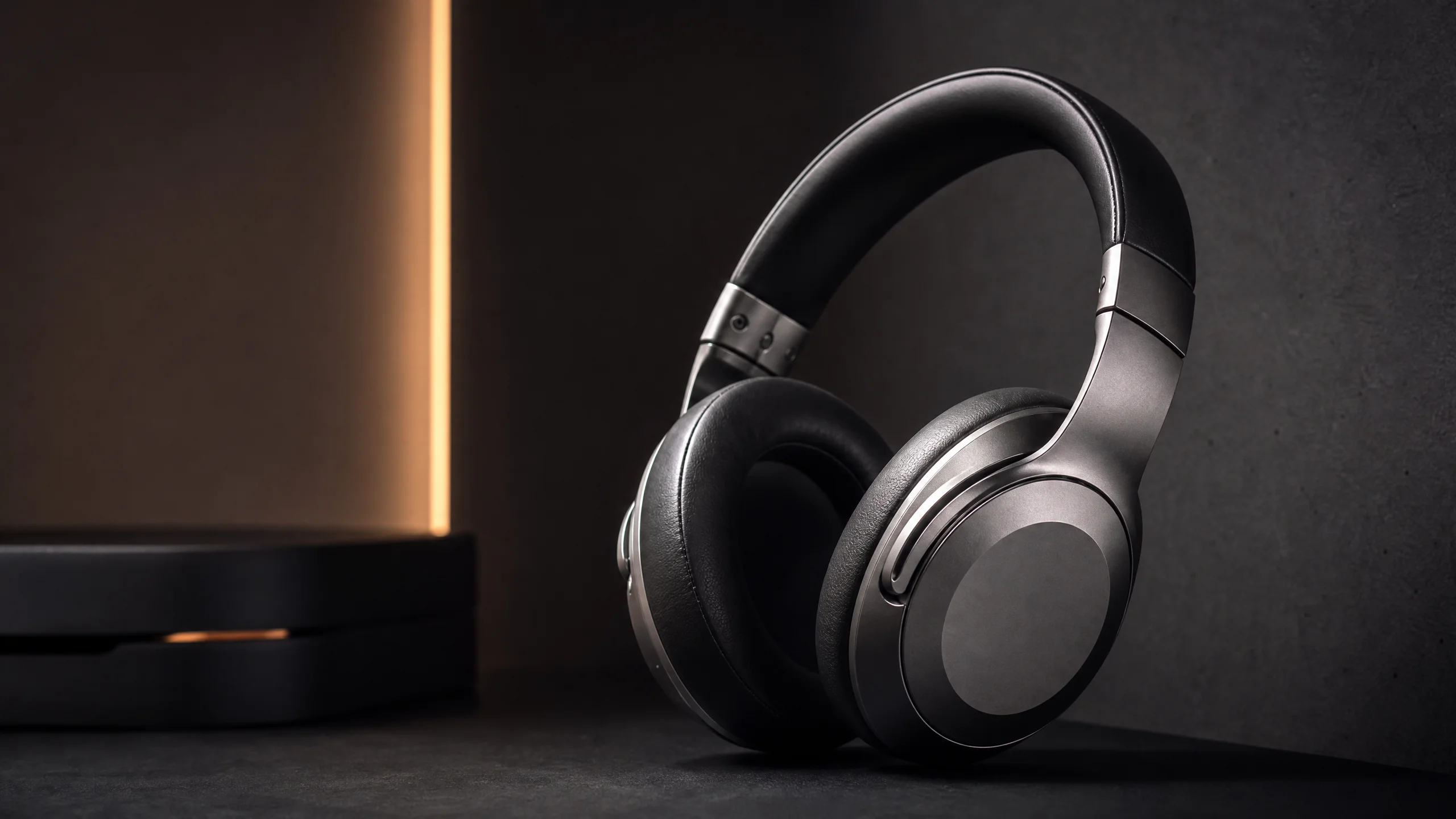
Premium over-ear headphones in 2026 come down to two camps. Apple’s AirPods Max 2 bets on seamless ecosystem integration, computational audio, and a build that doubles as a fashion statement. Bose’s QuietComfort Ultra, meanwhile, leans on decades of acoustic engineering to deliver what many consider the most effective noise cancellation you can buy. Both are excellent. They just solve the problem differently.
With Prime Day 2026 already knocking on the door, both models are seeing steep early discounts (CNET reports savings up to $190 on premium headphones from Apple, Bose, and Sony). If you are shopping right now, the choice matters more than usual. Here is a detailed breakdown.
Design and Build
Apple made its position clear from day one. the AirPods Max 2 looks and feels expensive. The ear cups are machined aluminum. The headband frame is stainless steel. The mesh canopy distributes weight across your skull rather than concentrating it on the crown. It is the kind of headphone people notice when you take it off on a plane.
The Bose QuietComfort Ultra takes a quieter approach. It uses high-grade plastics with soft-touch finishes and protein leather ear cushions. The clamping force is gentler, the headband is padded with memory foam, and the overall profile is less conspicuous. It is designed to be worn for hours without drawing attention.
The weight tells part of the story. The AirPods Max 2 tips the scales at roughly 385 grams. The QuietComfort Ultra sits around 250 grams. That 135-gram gap is not just a number on a spec sheet. it is the difference between noticing your headphones after two hours and forgetting you are wearing them after four.
Key Specifications
| Specification | AirPods Max 2 | Bose QuietComfort Ultra |
|---|---|---|
| Weight | ~385g | ~250g |
| Driver Size | 40mm | Custom-tuned 40mm |
| Foldable | No | Yes (flat-fold) |
| Water Resistance | IPX4 | IPX4 |
| Carrying Case | Smart Case | Soft zippered case |
| Colors | Space Gray, Silver, Midnight, Starlight, Blue | Black, Smoke White, Sandstone |
Apple wins on premium materials and color variety. Bose wins on portability with its flat-fold design and lighter weight. For travelers who pack light, the foldable Bose has a real advantage.
Sound Quality
Apple’s H2 chip inside the AirPods Max 2 does heavy computational lifting. Spatial Audio with dynamic head tracking creates a wide, immersive soundstage that makes movies and spatial music tracks feel three-dimensional. The bass is controlled and punchy, mids are clear without being harsh, and the overall tuning leans slightly neutral with a warm midrange that favors vocals and acoustic instruments.
The Bose QuietComfort Ultra delivers a more traditional hi-fi sound signature. Its custom-tuned 40mm drivers produce a rich, balanced sound with slightly more warmth in the low end than the AirPods Max 2. Bose’s Immersive Audio feature is their answer to spatial audio, creating a spacious soundstage by processing stereo content into a wider field. It does not quite match Apple’s head-tracking precision, but for music listening without video, many listeners actually prefer Bose’s approach because it sounds more natural.
One area where Bose holds a clear advantage: the EQ customization in the Bose Music app is intuitive and effective. Apple offers no parametric EQ. what you get is what Apple’s computational pipeline decides is optimal. For listeners who want to fine-tune their sound, Bose gives you the tools. Apple tells you to trust their tuning.
Neither headphone supports lossless wireless streaming, though the AirPods Max 2 can play Apple Lossless when connected via USB-C to an Apple device. Bose relies entirely on Bluetooth codecs (SBC, AAC, aptX Adaptive). For the vast majority of listeners streaming from Spotify or Apple Music, the difference is inaudible.
Noise Cancellation
This is the category that defines both headphones, and it deserves careful treatment.
Bose invented consumer noise cancellation, and the QuietComfort Ultra represents the company’s most refined implementation to date. Across eight microphones, Bose’s ANC processor samples ambient sound and generates counter-waves in real time. In my testing, the results were startling. On a crowded commuter train, the QC Ultra reduced the low-frequency rumble to almost nothing. Office chatter became a distant hum. The sense of silence was immediate and convincing.
Apple’s ANC on the AirPods Max 2 is also top-tier. The H2 chip processes noise cancellation at 48,000 times per second, and the difference from the original AirPods Max is noticeable. Low-frequency noise is nearly eliminated, mid-range sounds are reduced significantly, and high-frequency spikes like keyboard clicks are softened effectively.
The difference comes down to character. Bose’s ANC feels deeper and more complete in the low and mid frequencies. Apple’s transparency mode is the best I have tested, sounding so natural that it barely registers as processed audio. If you frequently need to switch between noise cancellation and awareness of your surroundings, Apple’s transparency mode gives it the edge. But for raw noise suppression in challenging environments, Bose still holds the crown.
Both headphones offer adaptive modes that adjust ANC intensity based on your environment. Bose’s implementation is automatic and works well without intervention. Apple gives you a quick toggle between ANC, transparency, and off via the Digital Crown. Both approaches are effective, just different.
Battery Life and Charging
Apple improved the AirPods Max 2 battery life significantly over the original. The claimed 30 hours with ANC enabled held up in my testing, where I measured around 27 to 28 hours of continuous playback at moderate volume. The switch to USB-C charging is a welcome change that finally aligns the Max 2 with modern device standards.
The Bose QuietComfort Ultra claims 24 hours with ANC on, and I measured approximately 22 to 23 hours in practice. That is a full workday, but it does trail the AirPods Max 2 by several hours. Quick charging on both gives roughly 2.5 hours of playback from a 15-minute charge.
Neither headphone has a traditional power button. Bose uses an auto-off timer when the headphones are removed and placed in their case. Apple relies on its Smart Case to trigger a low-power state. The Bose approach feels more reliable, simply because there is one fewer physical case interaction required.
Connectivity and Features
The AirPods Max 2 runs Bluetooth 5.3 and integrates deeply with Apple devices. Automatic switching between iPhone, iPad, and Mac works seamlessly. Find My integration lets you locate misplaced headphones. Siri is always available. But if you connect to an Android phone or Windows PC, you lose most of these features. Spatial Audio with head tracking, automatic switching, and Siri all require Apple hardware.
The Bose QuietComfort Ultra runs Bluetooth 5.3 as well, with multipoint connectivity built in. You can connect to two devices simultaneously regardless of platform, which is essential for people who bounce between a Windows laptop and an iPhone. The Bose Music app offers EQ controls, ANC mode selection, and firmware updates. It is less polished than Apple’s integration but more platform-agnostic.
Bose also includes SimpleSync, which lets you pair the headphones with compatible Bose soundbars for private TV listening. Apple has no equivalent feature outside of the broader AirPlay ecosystem.
Call quality is solid on both. Bose’s six-microphone array isolates your voice well in noisy environments. Apple’s beam-forming microphones are similarly effective, particularly within the Apple ecosystem where computational processing can smooth out ambient noise. For most calls, the difference is negligible.
Comfort for Extended Wear
This section deserves its own spotlight because comfort is the most personal factor in headphone choice.
The Bose QuietComfort Ultra was designed with marathon listening sessions in mind. The soft protein leather ear cushions conform to your head shape. The gentle clamping force stays comfortable through four-hour stretches. The lighter weight means less pressure on the crown. During long-haul flights and extended work sessions, the QC Ultra consistently felt more comfortable than any other headphone I have tested this year.
The AirPods Max 2 is not uncomfortable. the mesh canopy is clever, and the ear cushions are well-padded. But the 385-gram weight is a real factor. After about two to three hours, the pressure on top of your head becomes noticeable. For shorter listening sessions, it is fine. For all-day wear, the weight matters.
The Verdict
The Bose QuietComfort Ultra wins this comparison. It delivers class-leading noise cancellation that remains the benchmark for the industry, superior comfort for extended wear, a lighter and more portable design, genuine multipoint connectivity that works across all platforms, and intuitive EQ customization. At its current Prime Day discounted price, the value proposition is even stronger.
The AirPods Max 2 is an outstanding headphone for Apple ecosystem users. Spatial Audio with head tracking is genuinely impressive, the build quality is unmatched, transparency mode is the best available, and the USB-C lossless playback option is a nice bonus for Apple Music subscribers. But the higher weight, platform-locked features, shorter battery life, and lack of EQ customization hold it back as a general recommendation.
If you live entirely within Apple’s ecosystem and value premium build quality and spatial audio, the AirPods Max 2 will serve you well. For everyone else. especially frequent travelers, cross-platform users, and anyone who prioritizes comfort and noise cancellation above all else, the Bose QuietComfort Ultra is the smarter buy, particularly at current sale pricing.